Redaktorius Andrius Kulikauskas
ExhibitPlans
Below is a machine translation from Lithuanian. Here is the original.
Necropolis of the Jerusalem of Lithuania
My plans for the exhibition
Andrius Kulikauskas
ms@ms.lt, +370 607 27 665, https://www.kapines.com
I invite you to familiarize yourself with the exhibition, which will be held at the Stained Glass Gallery of the Seimas of the Republic of Lithuania, from September 17 to 23, 2026.
I invite you to contribute to its creation, publication and full support!
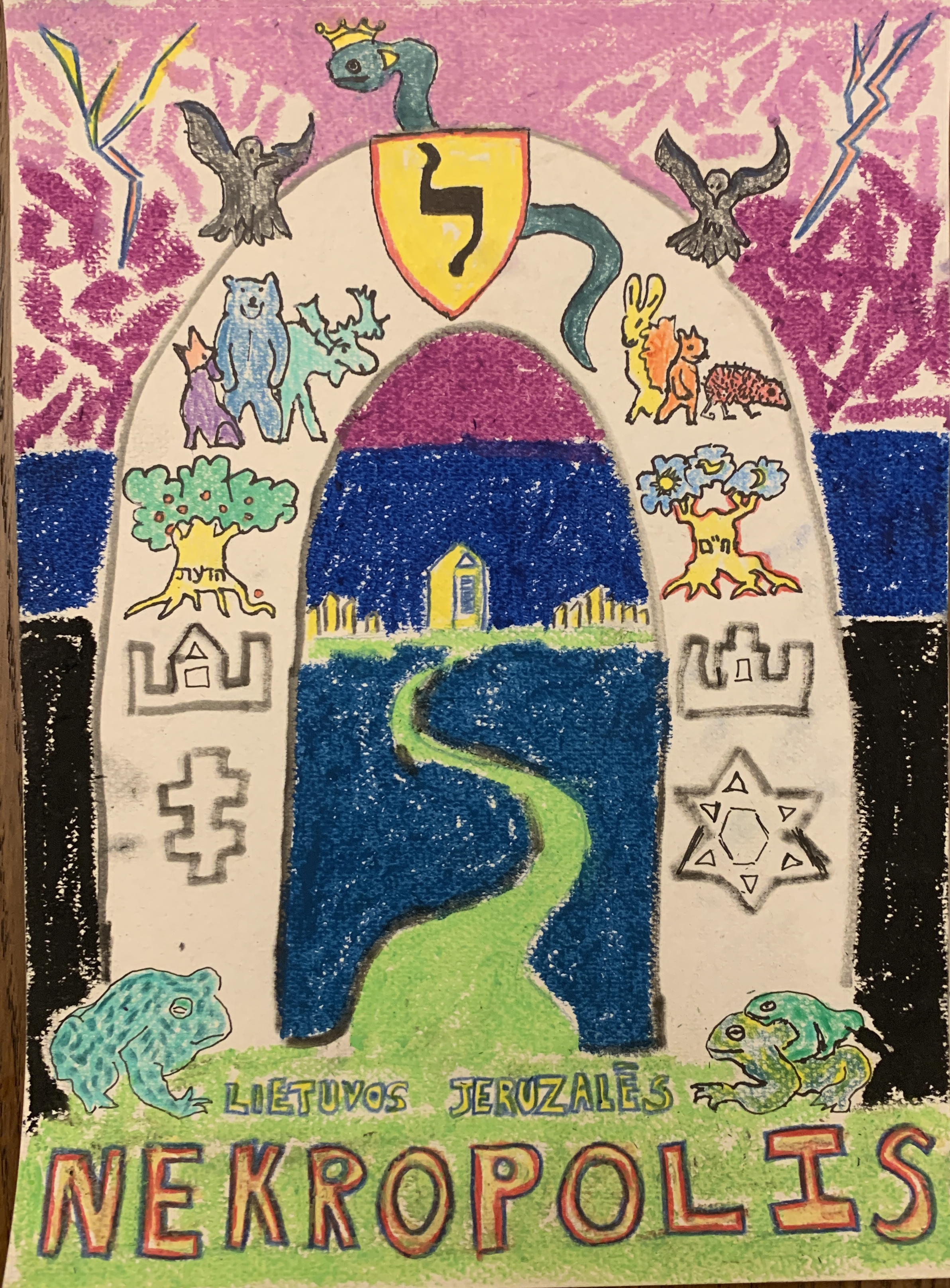
My exhibition poster. The Gate of Twilight. These gates announce to those entering the cemetery that Lithuania protects them for all the powers of our ancestors. The Necropolis of the Jerusalem of Lithuania is a place where good and evil, past and future, death and life collide. It is eerie, scary, dark, unsettling, but nevertheless bright, charming, noble, and noble.
Exhibition's goals: To cherish, restore, create, and protect spiritual wealth
The Soviets expropriated and desecrated the oldest Jewish cemetery in Vilnius. In the middle of it, they built the Sports Palace. Currently, the Seimas is considering whether to revive the Sports Palace, to house a congress hall, or perhaps a Jewish memorial. Vilnius' Jewish believers and their Lithuanian friends remained unheard:
No activity unrelated to the Jewish cemetery is appropriate!
Member of the Seimas Emanuelis Zingeris opened up the possibility for me, a wild artist, an independent historian, a public citizen, an independent thinker, to organize an exhibition for the Seimas members and specifically Lithuanians to understand the possibilities:
- 1) To restore the legal status of the cemetery, which the Soviets took away in 1955. There are still thousands of remains there.
- 2) To support the proposal of the Chief Architect of Vilnius, Laura Kairienė, for the public to consider the management of this area in a new, public, open, transparent, caring, creative, and friendly way.
- 3) To understand the Necropolis of the Jerusalem of Lithuania as a spiritual asset of Lithuania equal to the Gates of Dawn, the Hill of Crosses, the Nida Dunes, the Palace of the Governors, for which it is worth abandoning the Palace of the Soviet Union, restoring justice, creating a common heritage, and taking care of it together with God.
Arts awaken the imagination, bring together those who think differently, and change the rules that have come into force. Arts allow us to understand the Necropolis of the Jerusalem of Lithuania as a common heritage of Litvaks and Lithuanians, overshadowing time and space, vividly connecting us with the Grand Duchy of Lithuania, with the worldviews of Litvaks and Lithuanians, and with the achievements of Litvaks in exile.
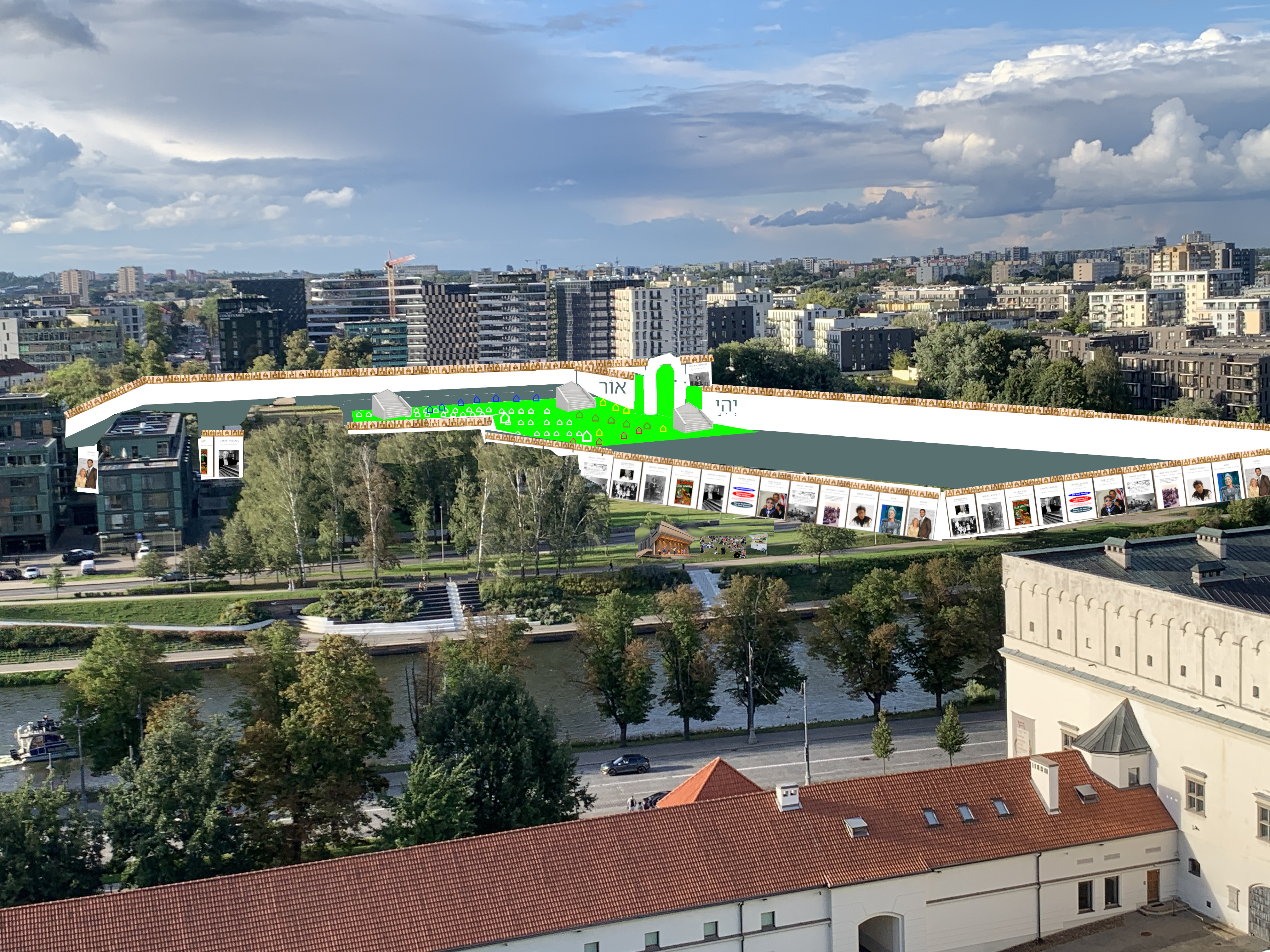
This is how the Lithuanian Jerusalem Necropolis would look from Gediminas Hill. The burial area is covered with a sustainable green cloth, the foundations of the Soviet Palace are planted with light green turf and restored tombstones, and a kilometer-long wall, five or six meters high, the exterior of which depicts the history of the Litvak land, and specifically the Litvaks who influenced humanity. The Gate of Dusk draws attention. To those leaving the cemetery, these gates proclaim "Let there be light" in various languages of humanity.
Exhibition goals: To familiarize and inspire members of the Seimas and the public
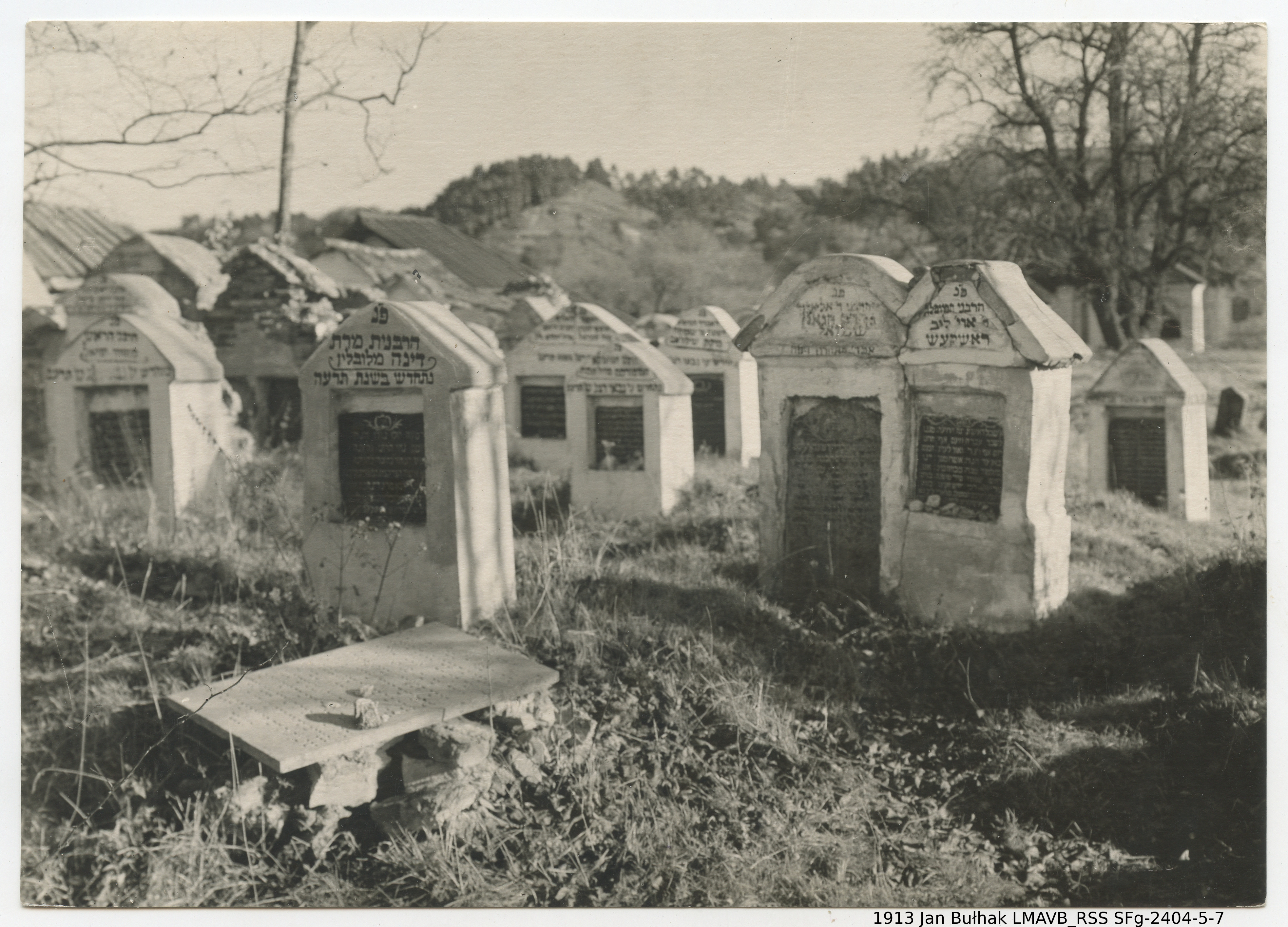
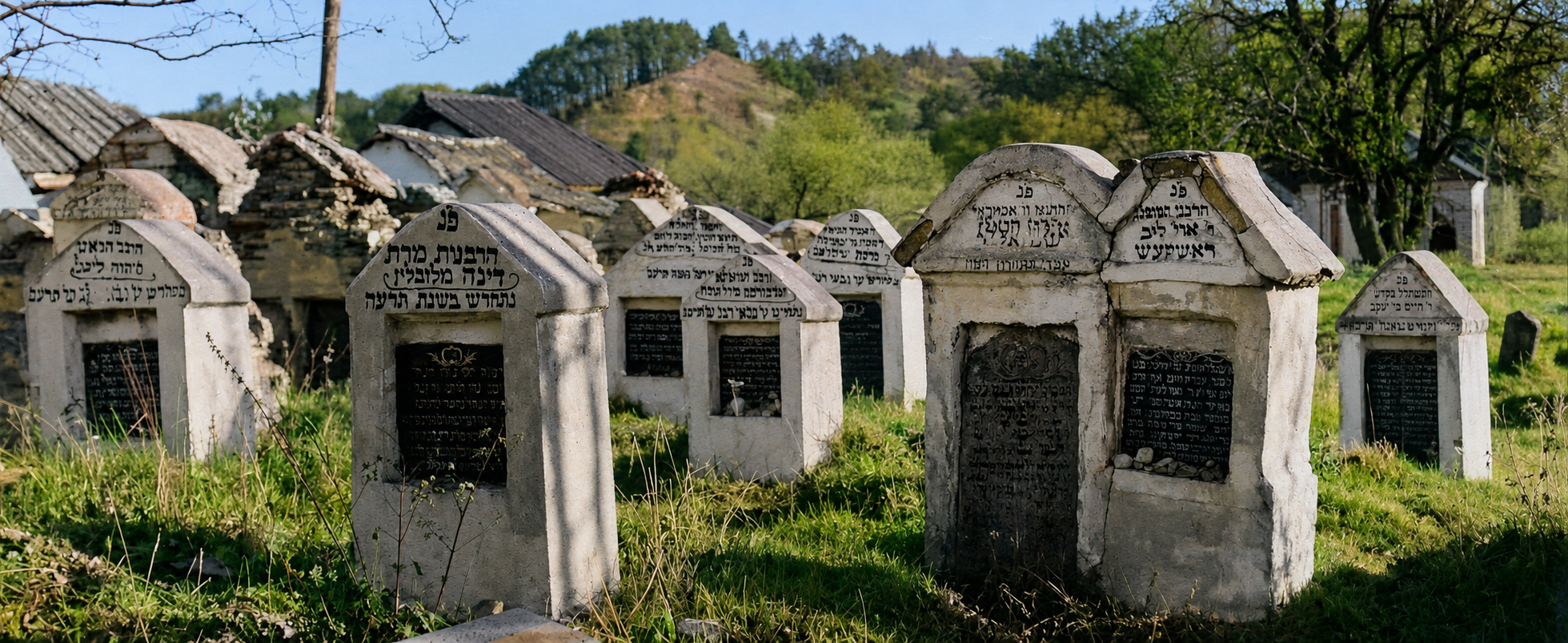
The famous Vilnius photographer Jan Bulhakas took a photo of this Necropolis in 1913. I colored his photo with artificial intelligence. I will print it on canvas and present it at my exhibition.
I proposed to hold an exhibition in the Seimas so that the Seimas members could refute with their own eyes and knowledge the widespread lies: "This is just the site of a former cemetery", "There are no remains there anymore", "The cemetery disappeared centuries ago", "The Jews sold their cemetery to the Tsar", "The Jews evicted all the remains", "There are no photographs and could not have been".
It is important for me to show:
- Maps. The necropolis covered an area of 4.3 hectares and it is believed that at least 30,000 people were buried there, judging by the Warsaw Jewish Cemetery (250,000 people in an area of 33 hectares) and the Rasų Cemetery (over 100,000 people in an area of 10 hectares). The Tsar's fortress occupied only a quarter of the cemetery and the ramparts were built over the remains, so that they remained there. The foundations of the Palace of Soviets occupied about a quarter of the remaining cemetery. The legal status of the cemetery was abolished only in 1955. Only the Vilnius Gaon, his relatives and maybe a few dozen people were reburied. More than 700 remains were found in 2002 during the cleaning of Olimpiečių and Rinktinės streets and adjacent pipelines. Thousands of remains are still in the Necropolis.
- Documents with which the Soviets committed a crime in 1940 by expropriating the cemetery, liquidating the Vilnius Jewish community as no longer compatible with the aspirations of the LSSR. The Soviets deliberately desecrated the cemeteries of Jews and other believers with construction.
- Historical photographs. I have collected 70 photographs presenting the Necropolis from various angles. Some show Gediminas Castle.
- Models of the ohel, in real size, to feel their size, volume, weight, and uniqueness. Klausner marked and described 220 ohel (tombstones) in his book. They can be restored.
- A model, on a scale of 1:50, showing the burial area, the foundations of the Palace of Soviets and the kilometer-long wall surrounding the cemetery. The Palace of Soviets was built in the middle of the cemetery, where the Vilnius Gaon and other prominent rabbis were buried.
- The close connection of this cemetery with the Upper Castle located above it. The cemetery was under the jurisdiction of the castle. The rulers patronized the Jews. The Vilnius Upper Castle and the Necropolis of the Jerusalem of Lithuania can be restored together as the heritage of the Grand Duchy of Lithuania.
I would like to emphasize:
- Many prominent rabbis were buried in the Necropolis, and with them the entire Lithuanian Jerusalem, which made Lithuania famous in the Jewish world.
- The Litvaks understood Lithuania broadly, as the Grand Duchy of Lithuania, which included not only Lithuania but also Belarus and Latvia. For us, Litvaks are a living connection with the Grand Duchy of Lithuania, with the Lithuanian statute.
- We can rejoice in the rich history of the Litvaks, how much the Litvaks have enriched humanity. Their public presentation would add to the respect for the cemetery and would make those who live and visit here believe that the Litvaks and Lithuanians have coexisted and will coexist beautifully. Lithuania and Vilnius cherish their past, present and future.
I will respond to the saying, The whole of Vilnius is built on cemeteries with an impressive exhibition, revealing the Necropolis of the Jerusalem of Lithuania as a huge spiritual treasure that unites the Litvaks and Lithuanians, both in Lithuania and abroad, intertwining our nations, worldviews, histories, and our friendship. By respecting this cemetery, we will respect all cemeteries, all the dead, and even more so, the living. We will become more alive ourselves.
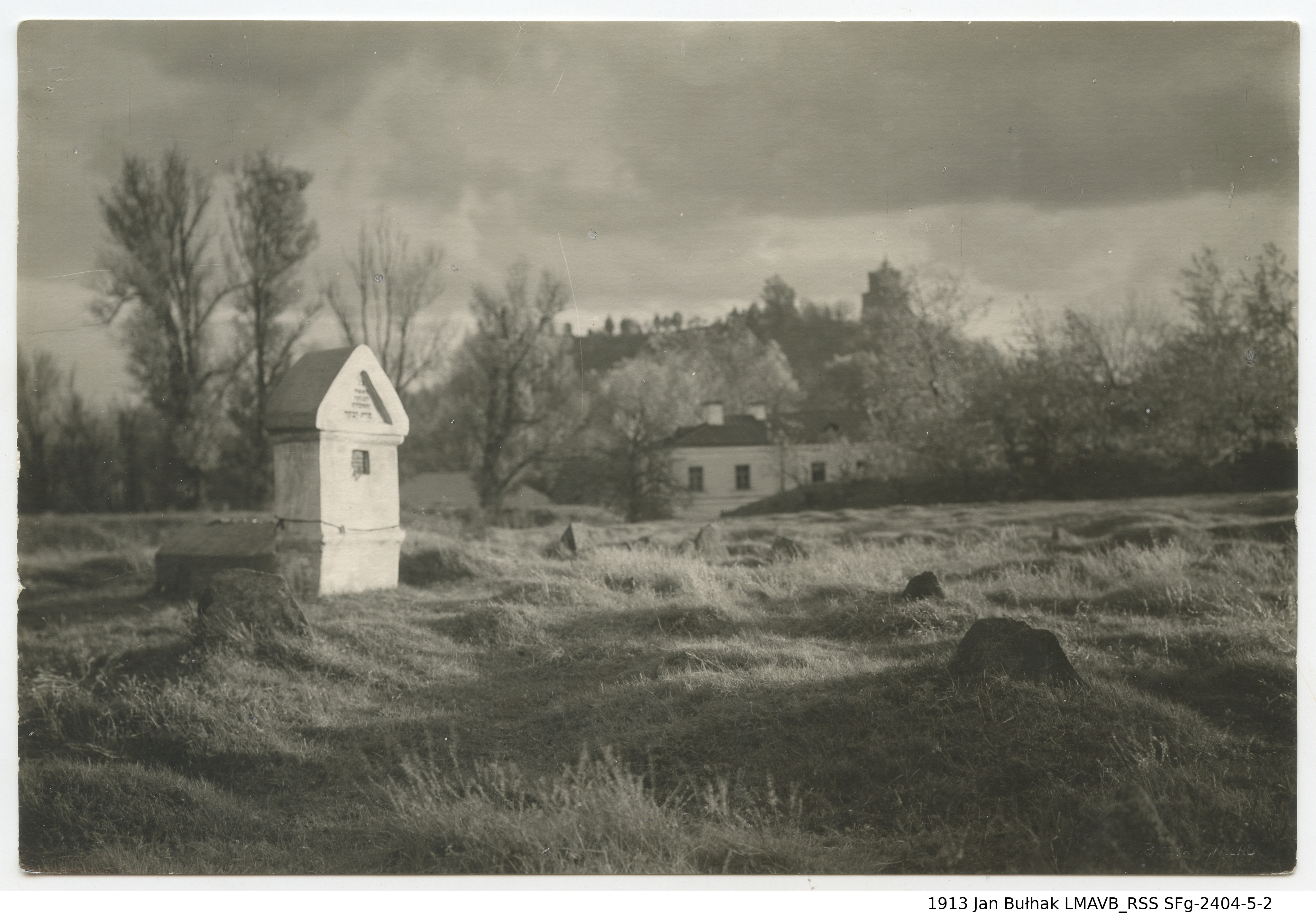
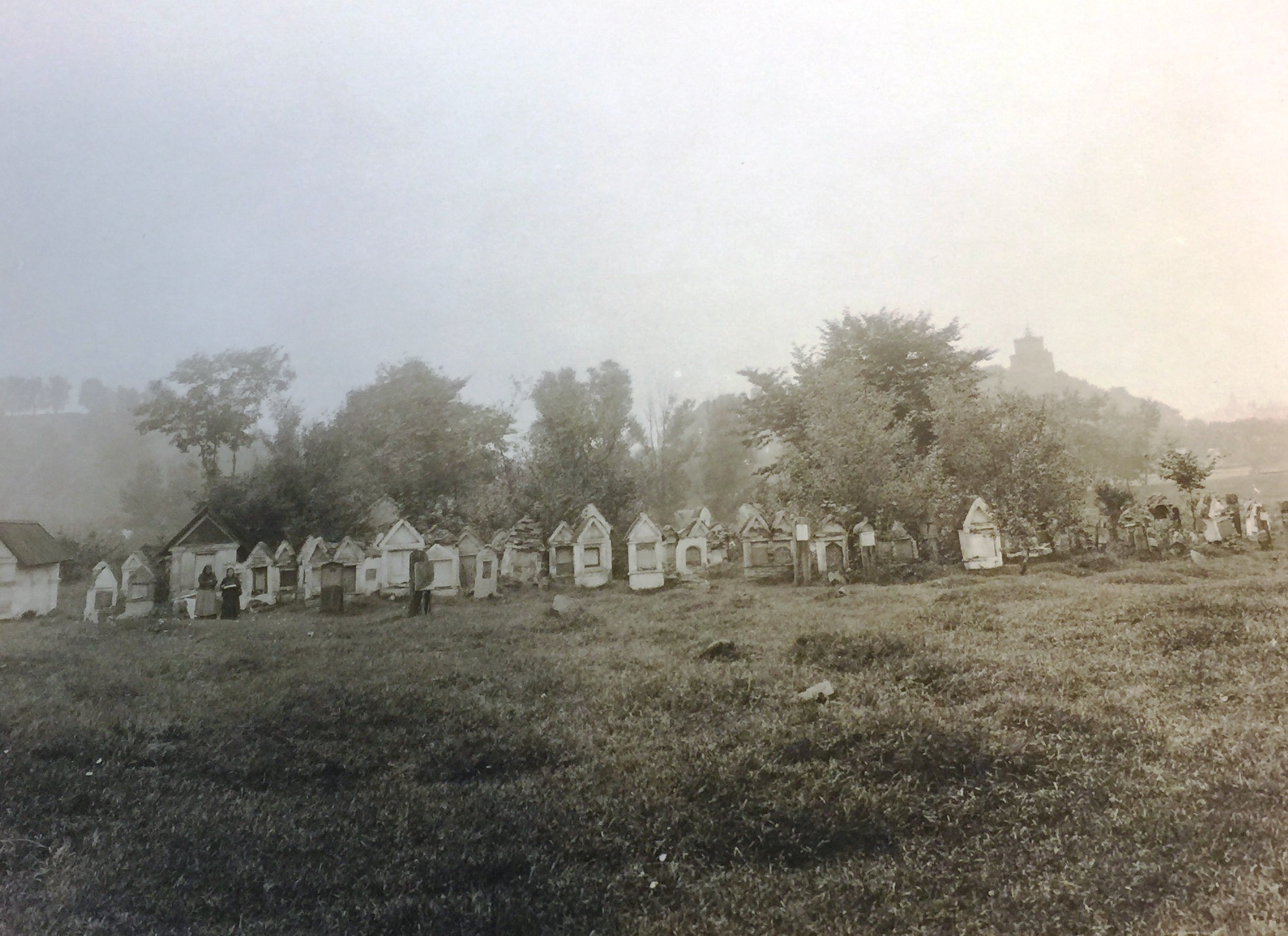
1913 photo of the Rivka ohel and the Tsar's fortress in the southwestern part of the cemetery by Jan Bulhak. (LMAVB) "A modest and worshiped woman, Rivka, the wife of our teacher and rabbi Nathan. May the living bind her soul." And a general view from the northern part of the cemetery, as the first row of ohels looked like (G.Leiman Library). The photos show Gediminas Castle, as it looked at that time.
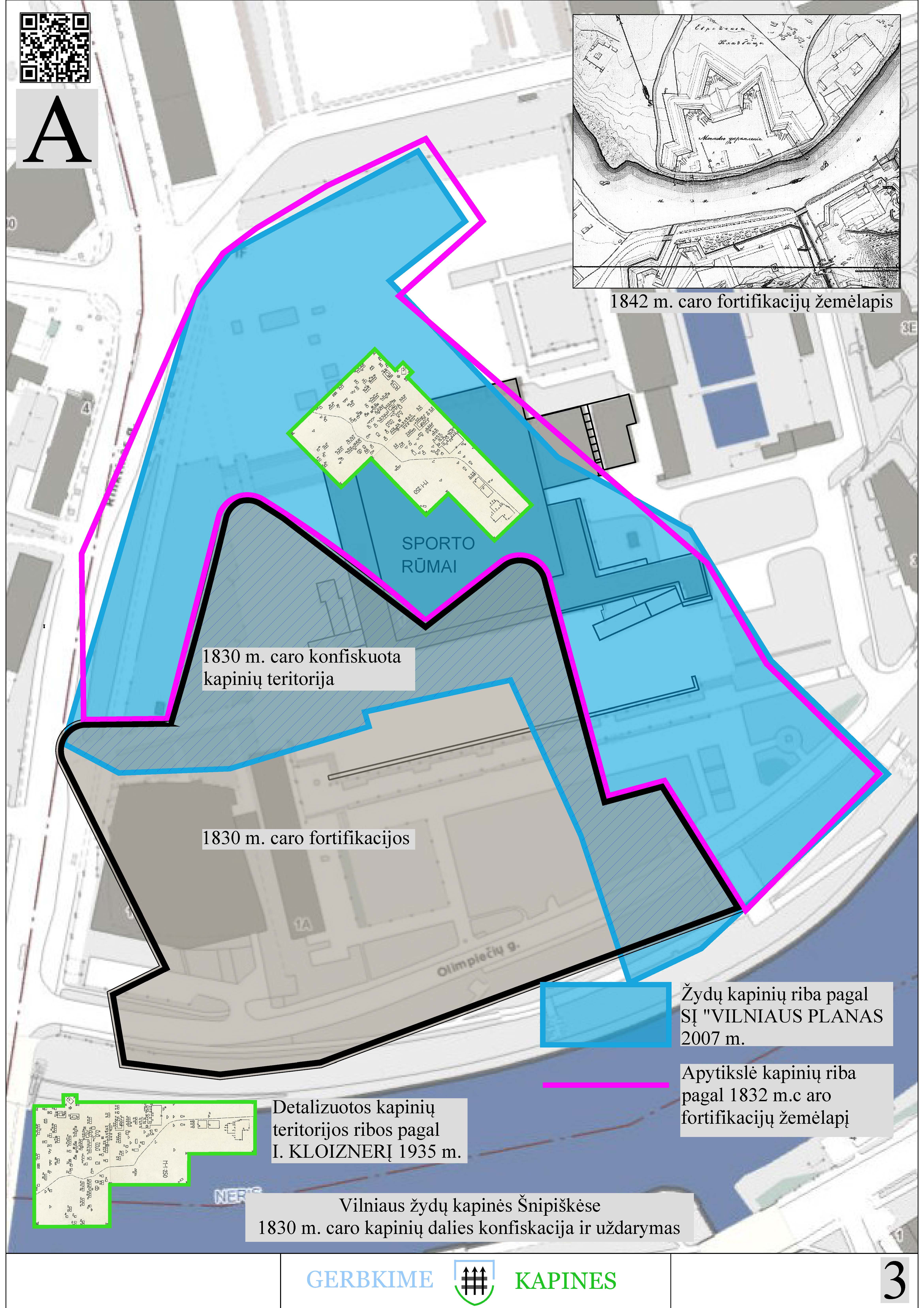
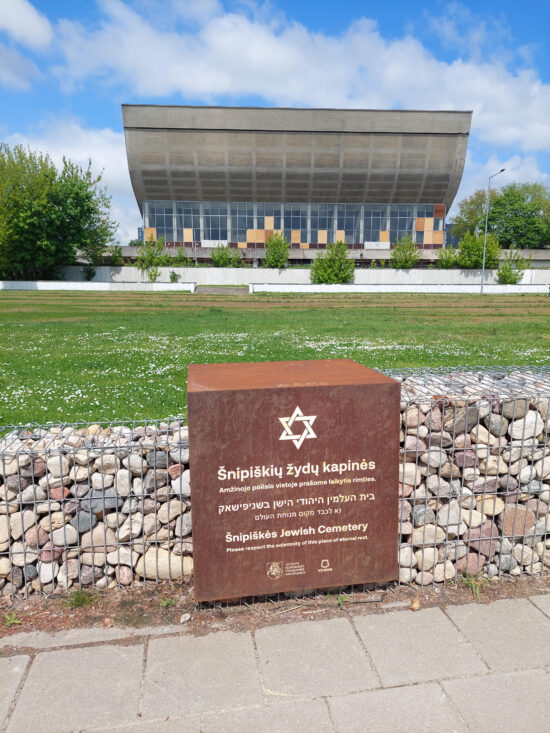
The map compiled by Artūras Imbrasas shows the cemetery territory (blue zone) which was violated by the Tsar's fortress and the Palace of the Soviets. The Soviets built their palace where the ohel of the most famous rabbis described by Klausner in 1935 stood (in the white polygon). In 2025, the Vilnius City Municipality and the Chancellery of the Government of the Republic of Lithuania marked the cemetery boundary with a stone wall.
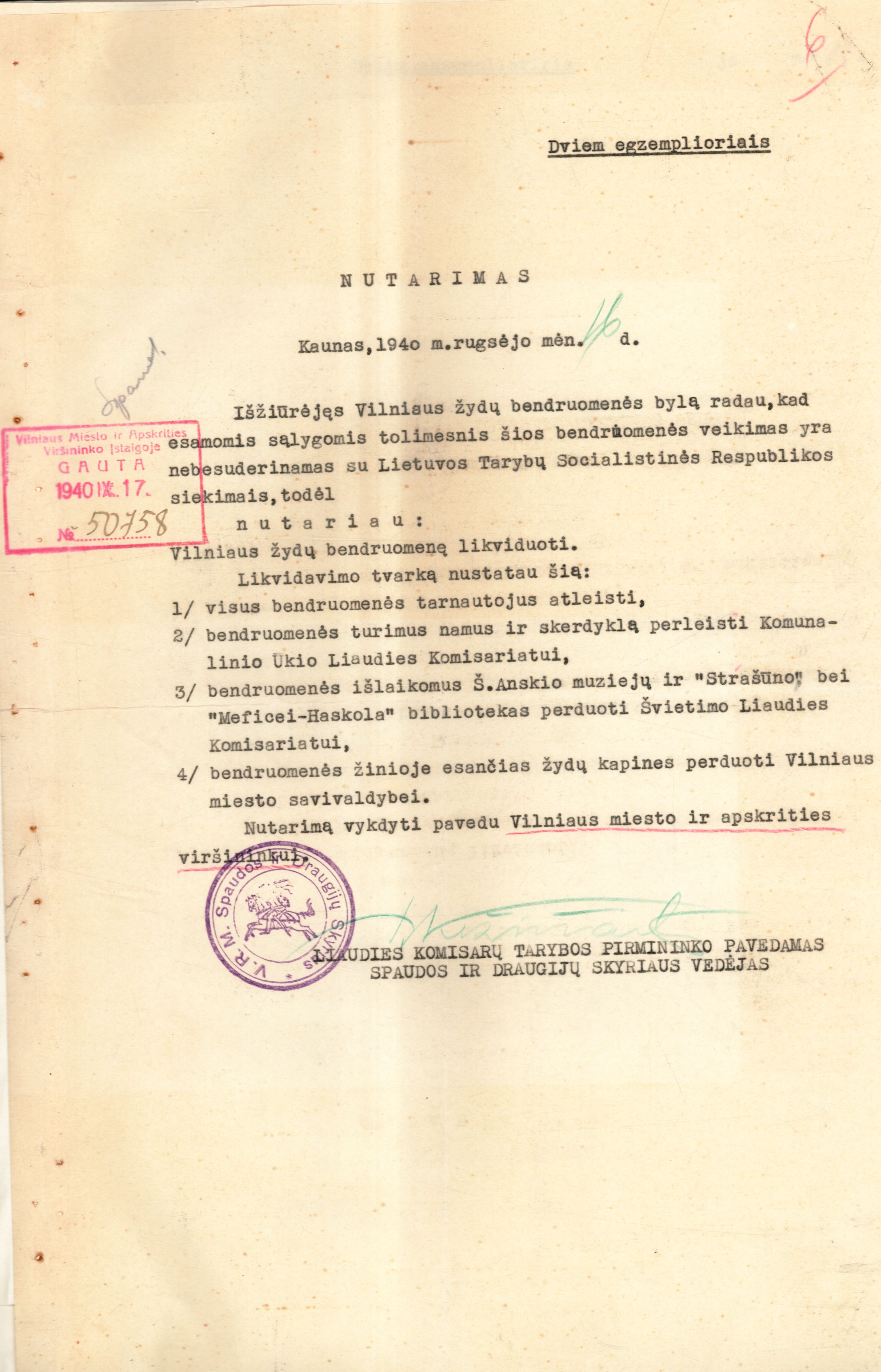
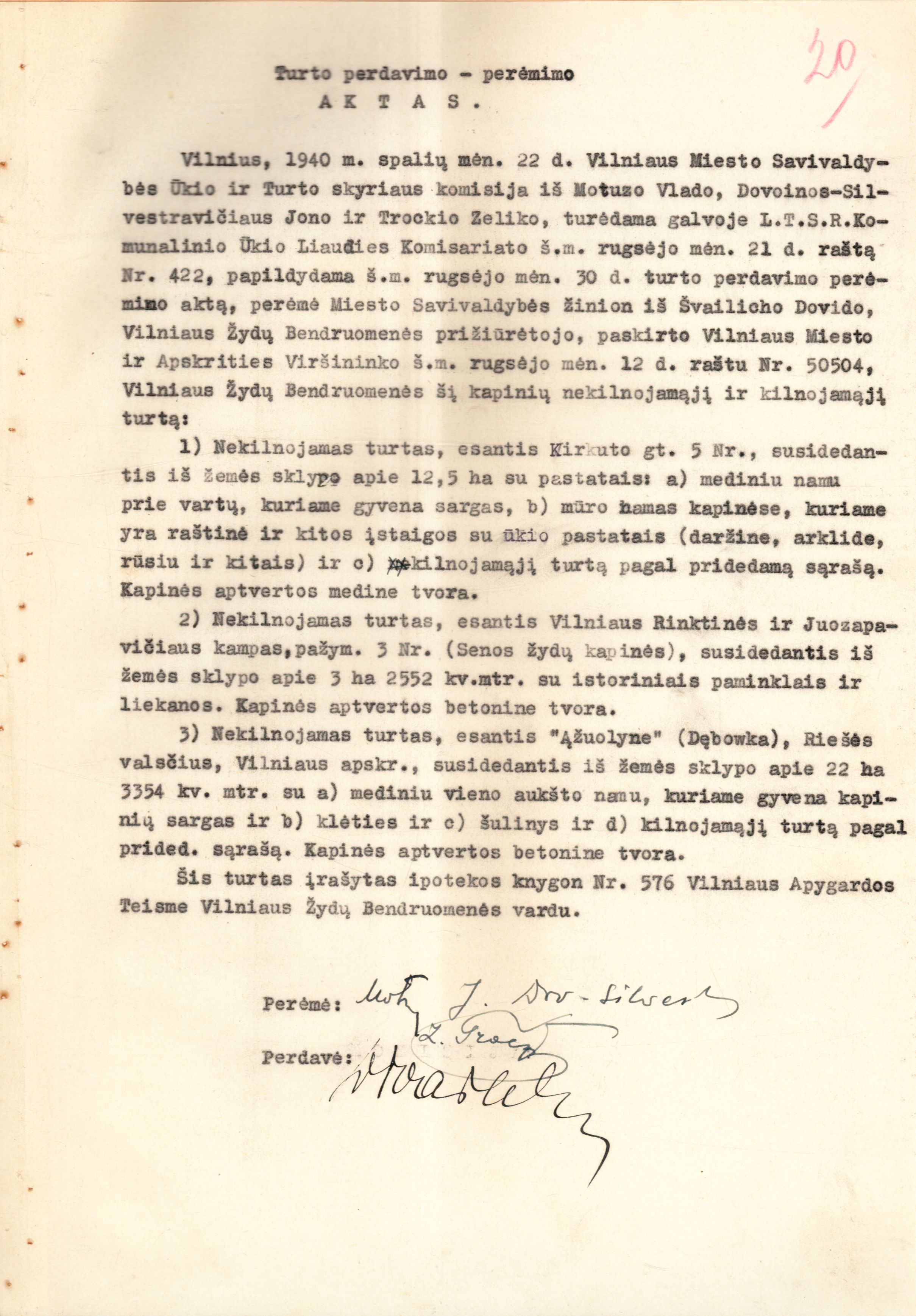
On September 16, 1940, the LSSR liquidated the Vilnius Jewish community and expropriated the Jewish cemetery. On October 22, 1940, the property transfer and acceptance act named the cemetery located at the corner of Rinktinės and Juozapavičiaus streets.
Exhibition parts: Model, ohel, tablets
The Seimas Stained Glass Gallery is large (17.4 m x 12.6 m), with clear boundaries, like a separate world that can be observed from three sides from above. As a maximalist, I am drawn to using all its possibilities to involve passers-by in the Necropolis of the Jerusalem of Lithuania.
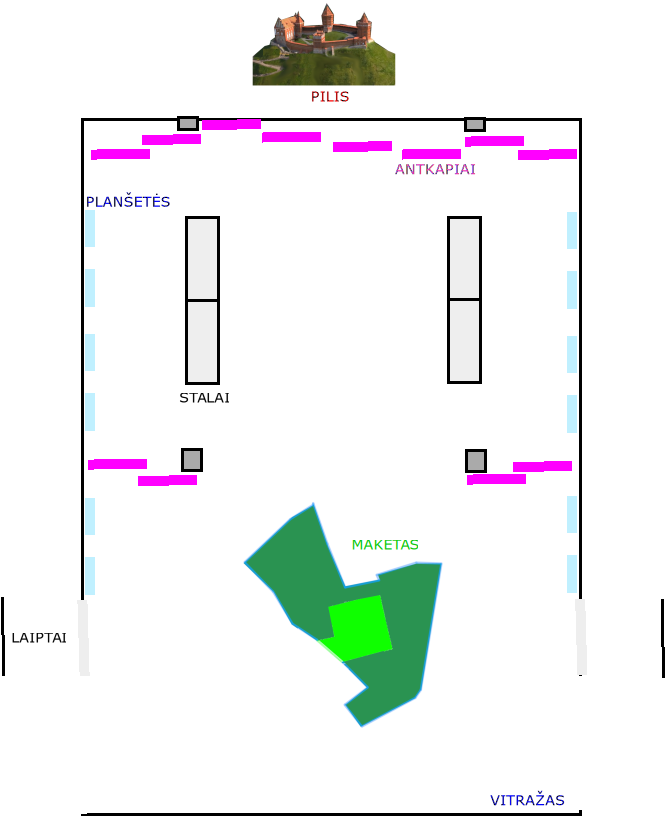
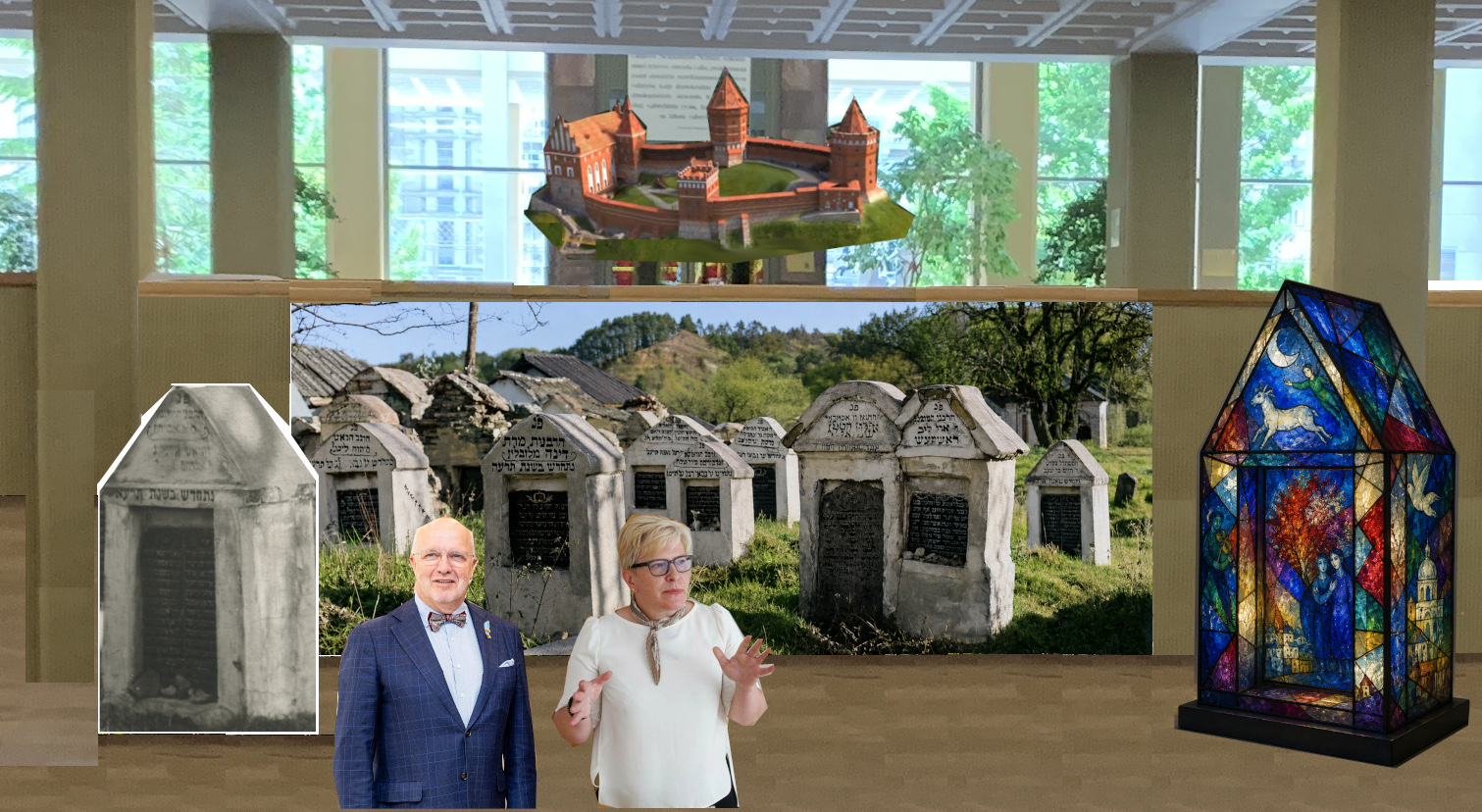
Plan of how I will set up my exhibition in the Seimas Stained Glass Gallery.
Going down the stairs, on the north side of the gallery there is a large model (6 m x 5 m) on a scale of 1:50. It will allow us to feel the relationship between a person (3 cm), an ohel (4 cm) and the entire Necropolis. The model will feature:
- The burial area, which I propose to cover with a durable fabric so that no one walks and there is no need to move the earth or mow the grass. This is the largest part of the Necropolis. I depict it with a green tarpaulin.
- The foundations of the Palace of Soviets (1.8 m x 1.8 m), on which I propose to plant turf, and on which to restore tombstones. I depict the turf with green towels. I cut the ohel from cardboard.
- The wall of the Necropolis, about a kilometer long. I propose to build it 5 m high, and on its outer side to depict the world of the Litvaks. I will depict it with upright A4 sheets (so the scale of the wall will be 1:17). I will need almost a hundred sheets. I will place them in holders. On each sheet I will introduce a famous Litvak. I will appeal to the members of the Seimas, the public and the youth to help select Litvaks and depict them.
I propose to understand the foundations of the Palace of Soviets as the ruins of an evil empire, a violator and desecrator of the cemetery of believers, a witness to the ongoing struggle between evil and good. Instead, I would restore the Vilna Gaon Mausoleum not on the edge of the foundations, where it was, but in the very center of the foundations, as an axis of spiritual tension. In this way, most of the ohel described by Klausner would fit on the foundations. I will supplement this restored heritage in various ways on the edges of the foundations. I will build a circle of several dozen tall colored ohel in all directions from the hearth towards the most famous Litvak cities and yeshivas, in short, towards Telšiai, Riga, Polotsk, Minsk, and so on. I propose to install screens in these ohel, showing historical photographs of Jewish life in those areas. All ohel will be directed towards Jerusalem, so the tension between the direction of Jerusalem and the lines of the foundations will be highlighted. I will further propose to emphasize this spiritual tension with contemporary sculptures inspired by the shape of the Obelisks. I will also build four places for people to sit. These will be four large Obelisk-shaped stands, 6 m x 3 m x 6 m, marked with the letters PaRDeS, from which it will be possible to observe the Necropolis, the Neris and the Upper Castle and simply contemplate them. These stands will also be directed towards Jerusalem. In this way, visitors will see a direct reconstruction of the Necropolis, but at the same time its reconstruction in spiritual dimensions.
On the other side of the gallery, I will hang from the ceiling an image of the reconstructed Upper Castle, on cardboard, 3 meters long, at the same scale of 1:50. This will help to understand the connection between the Upper Castle and the Necropolis, how the castle would look from the Necropolis, and how the Necropolis would look from the castle.
At the back of the gallery I will hang one large artificial intelligence-colored photo (2 m x 4.88 m) taken by Bulhak, as well as other images, black and white, showing the mausoleum of the Vilna Gaon (1720-1797) and the oldest mausoleum of Rabbi Menachem Manes Chayesh (1560-1636) from various angles.
Next to the photos, I plan to build life-size ohel (1.9 m x 0.9 m x 0.5 m) made of cardboard boxes and paper in the gallery. I will print enlarged photos on the surfaces of some ohel, and paint the surfaces of other ohel in a modern style, expanding the possibilities of the ohel form.
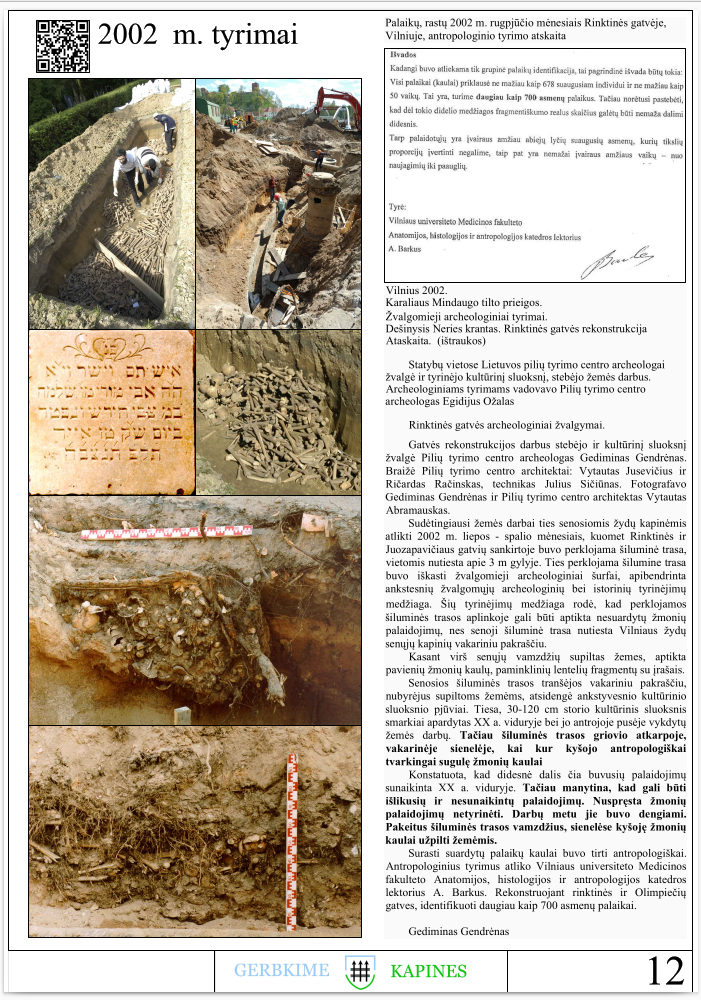
The walls of the gallery will be decorated with 12 tablets presenting the Necropolis and my personal proposal for its management.
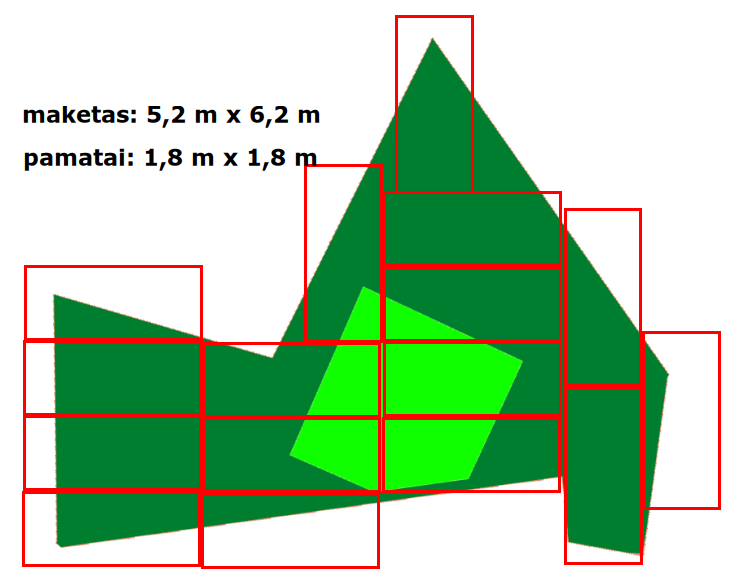
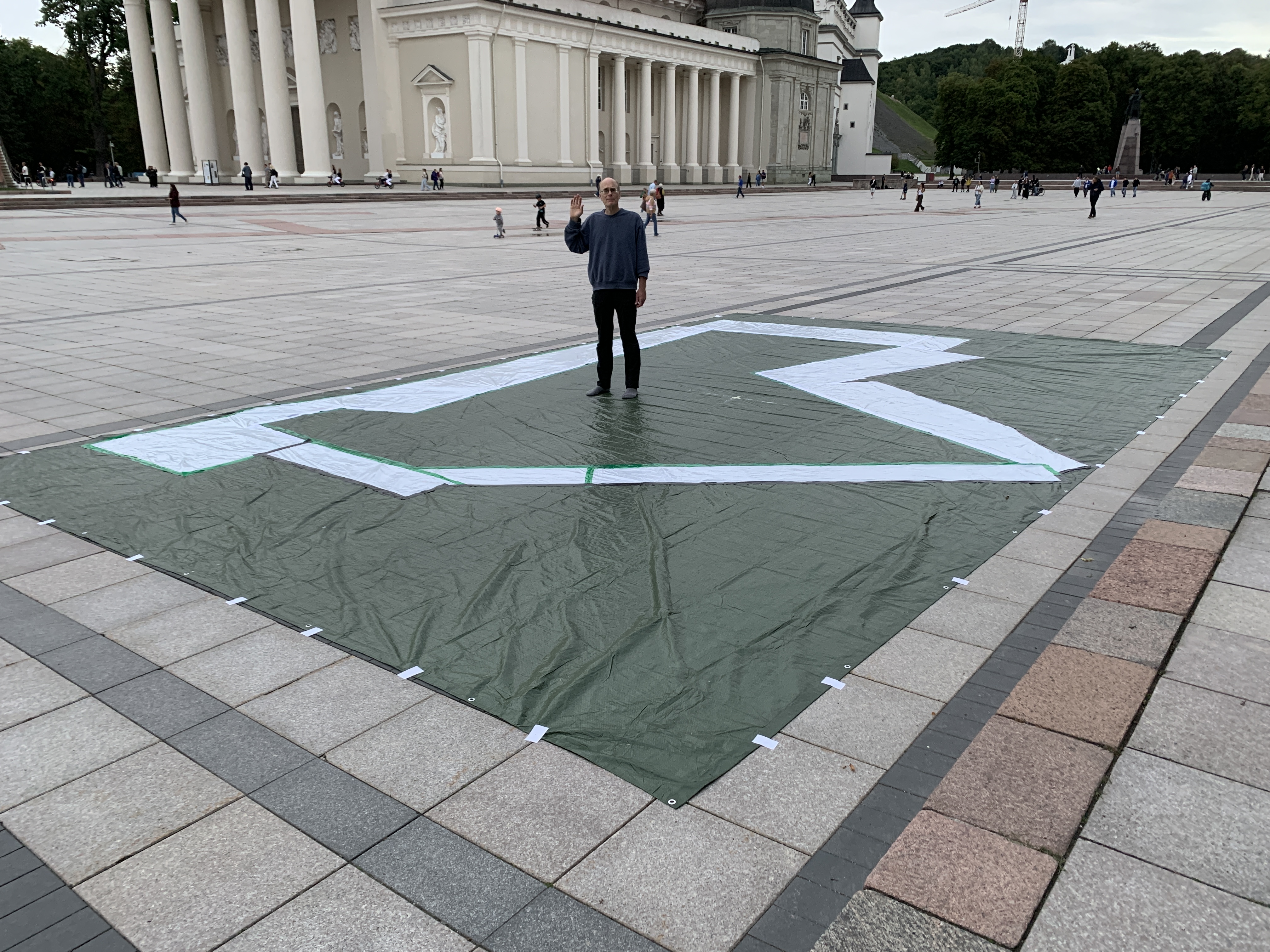
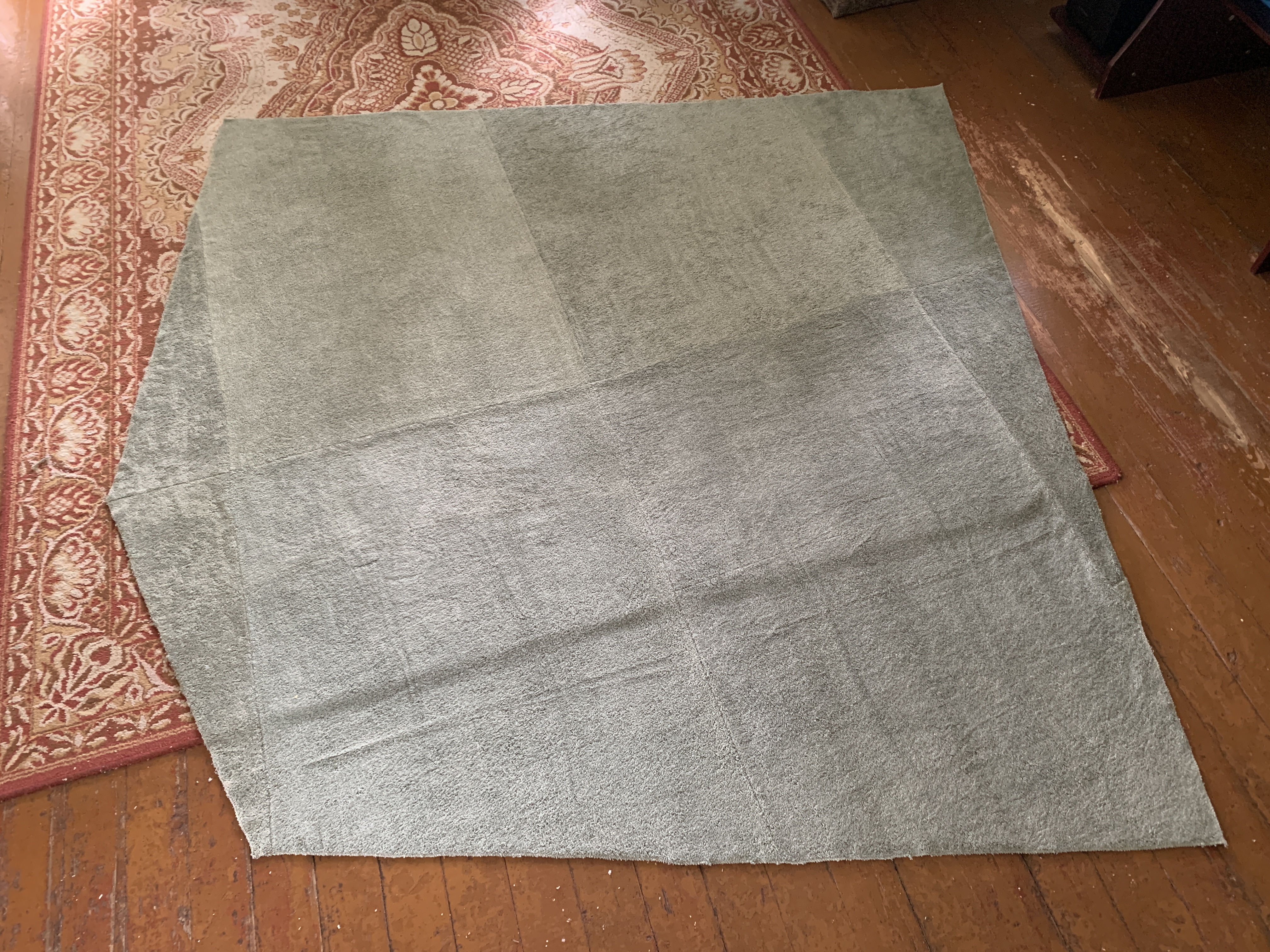
I prepared a tarpaulin (6 m x 10 m) for the model. I will stretch it on the tables. I will need about sixteen of them. Albina, a seamstress from Eičiūnai village, sewed me the foundations from green towels to resemble turf. The seams meet in the center where I will build the Gaon Mausoleum. The seams are directed towards Jerusalem, like the ohel. They emphasize the tension between the Soviet Palace and the Necropolis.
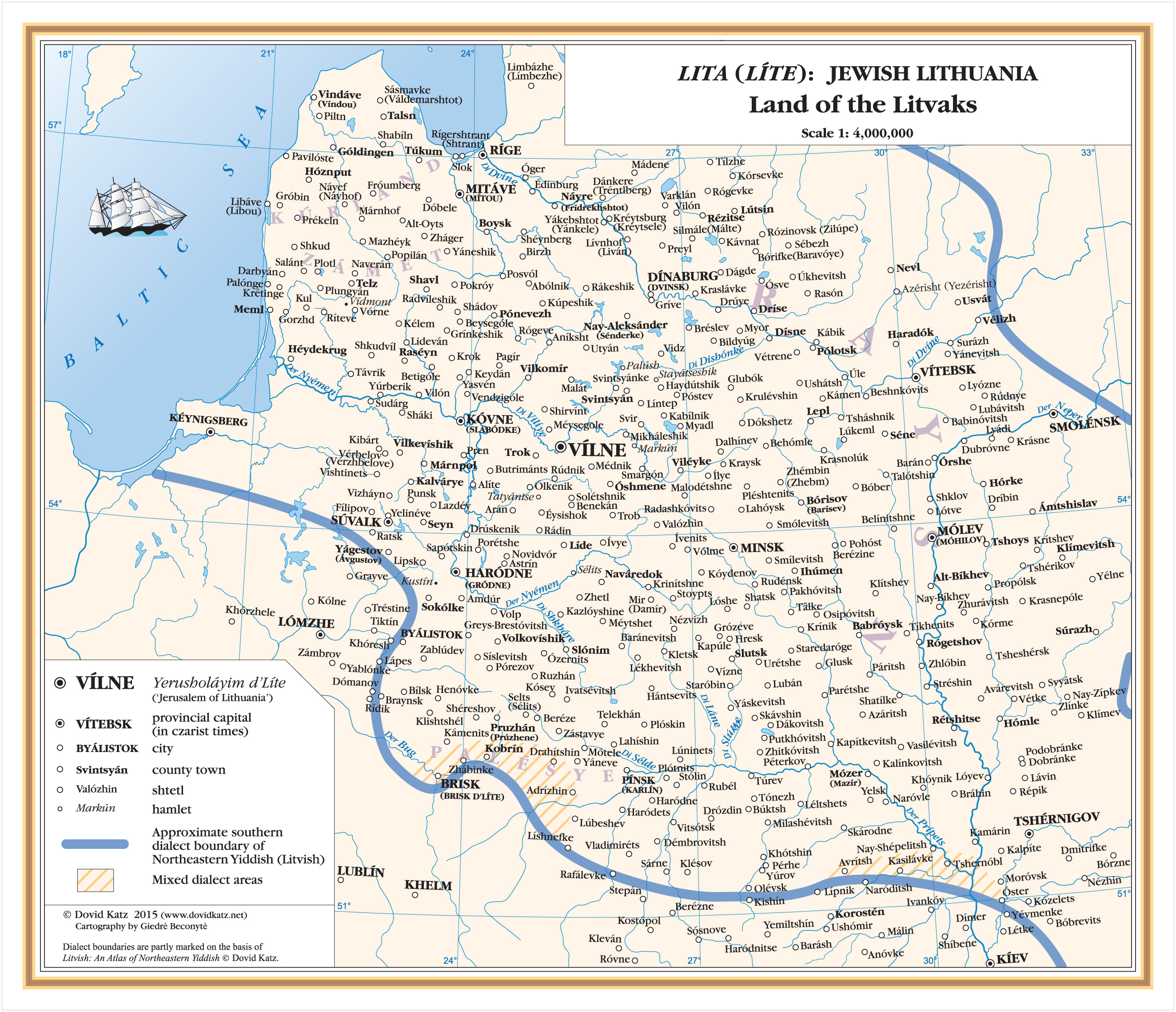
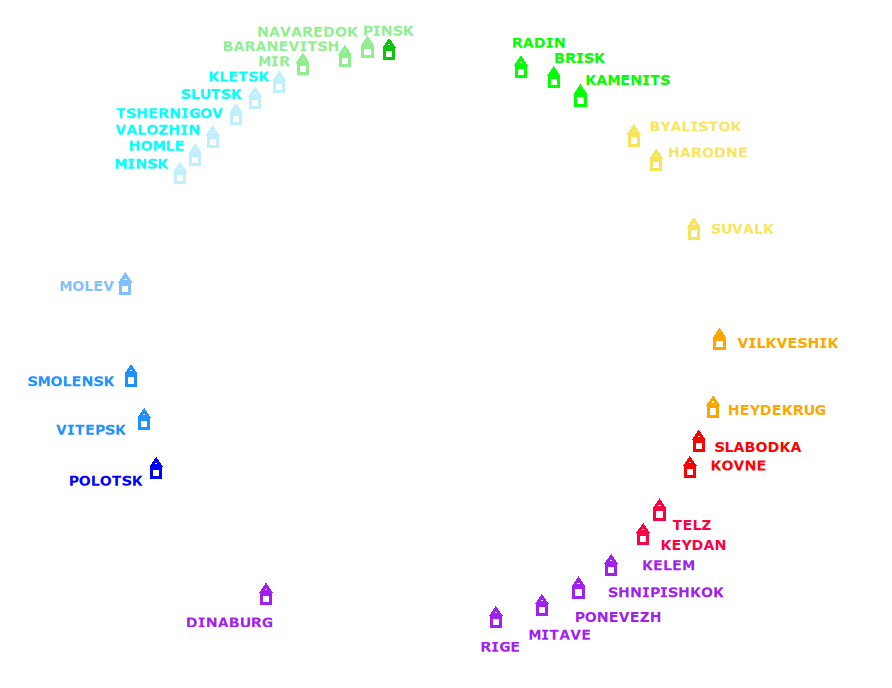
Dovid Katz has defined the Litvak area based on the Yiddish dialect they speak, their religious traditions, and other characteristics. I will place a circle of colored ohels representing Litvak towns and yeshivahs in various directions from Vilnius. Each colored ohel will have a digital table displaying historical photos from that area.
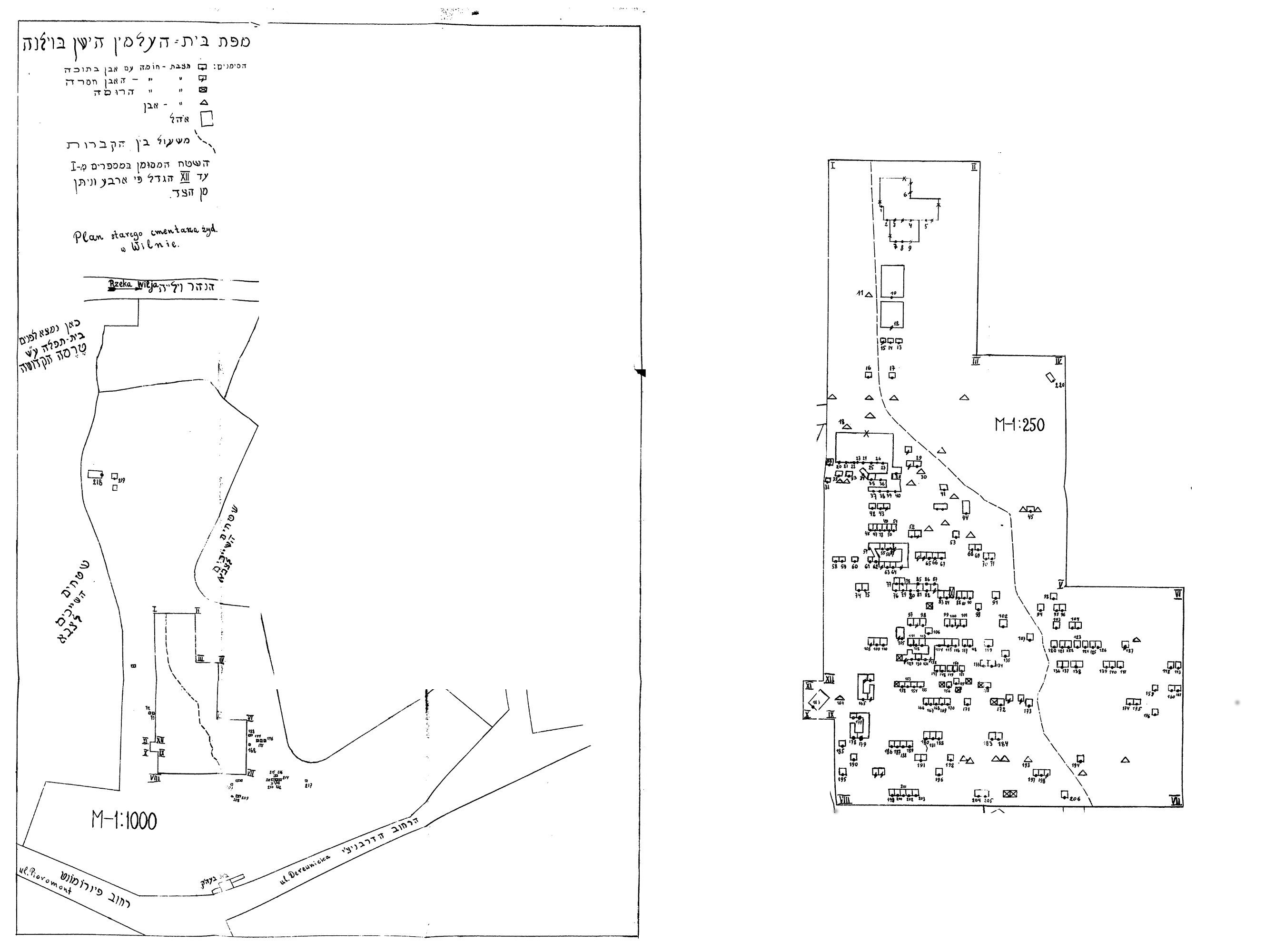
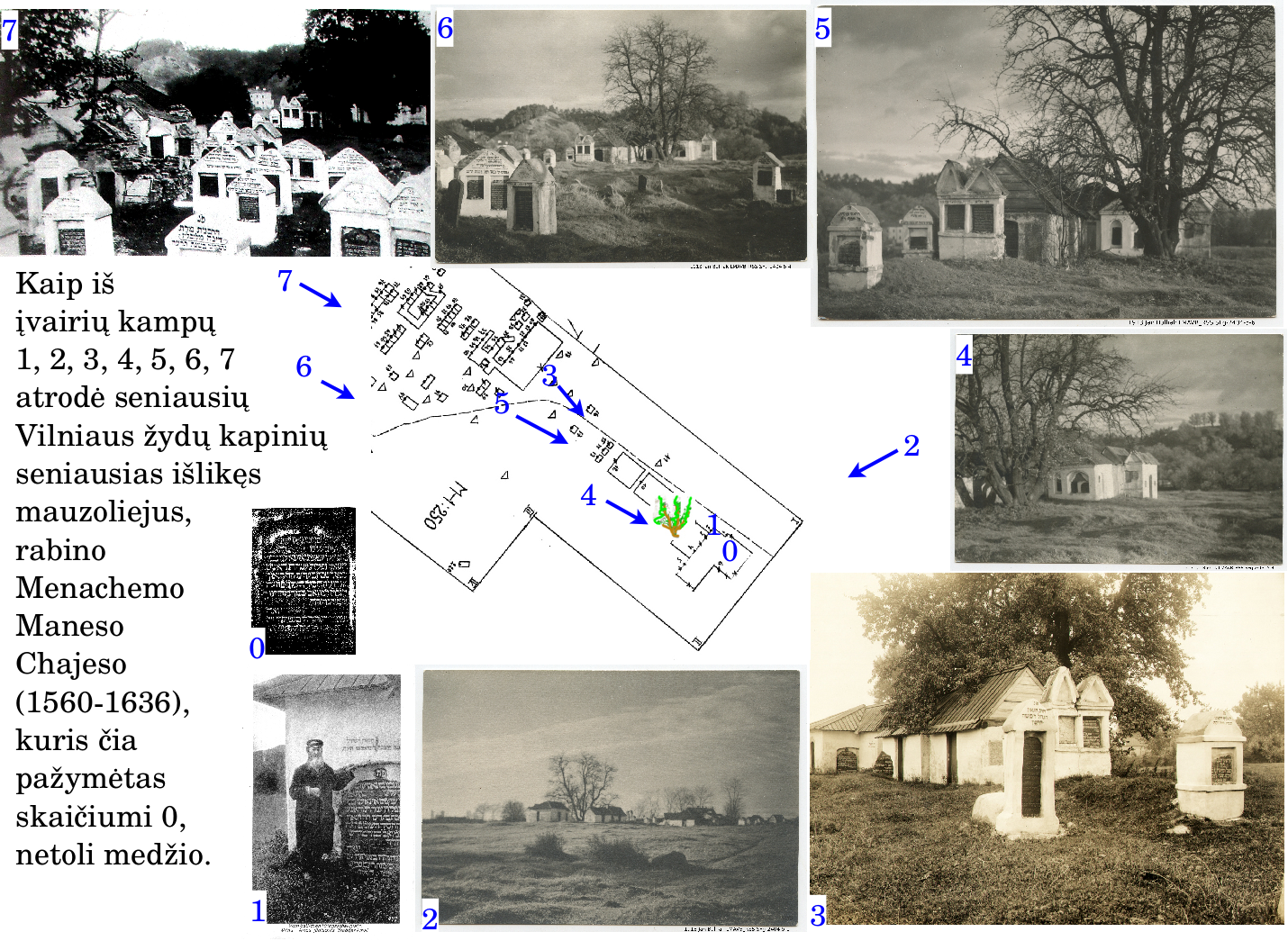
In 1935, Israel Klausner described the most famous tombstones and made a plan of them. There are about a hundred photos that have survived from which one can create a picture of the cemetery, starting with the mausoleum of the oldest rabbi, Menachem Manes Chajes. It is possible to reconstruct the Necropolis.
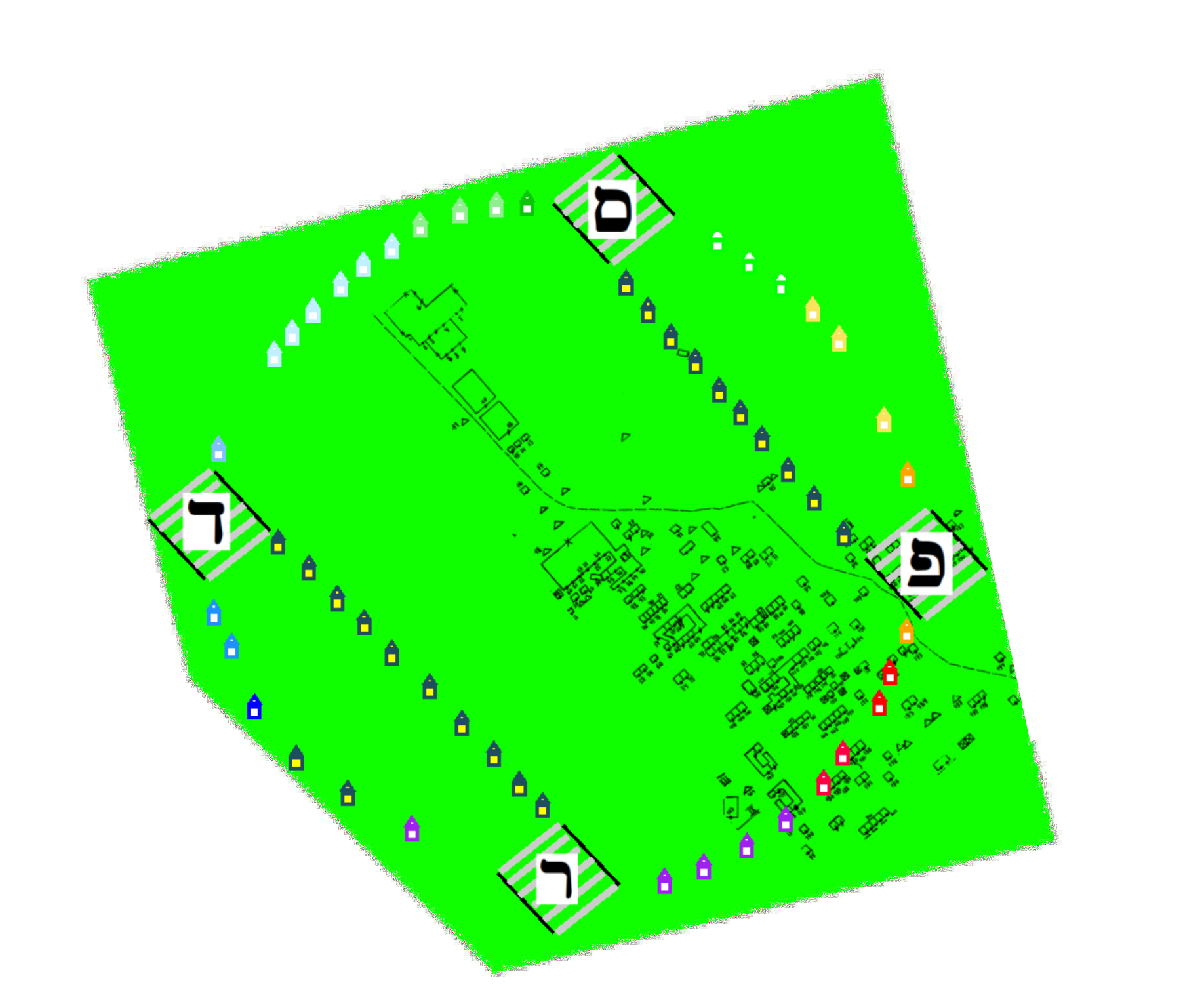
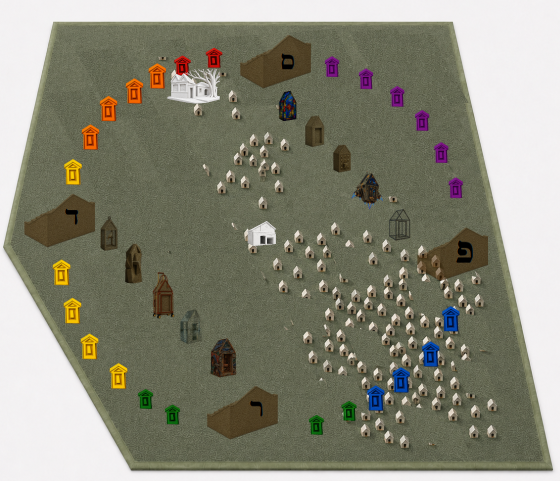
I propose to rebuild the mausoleum in the center of the foundations, where the Vilnius Gaon was buried, and according to Klausner's map and photographs, to rebuild all the ohel around it, as much as will fit on the foundations. I propose to supplement these traditional ohel with a ring of colored ohel with digital plates presenting photographs from that direction from the Vilnius Jewish yeshivas and the cities and towns they inhabited. All ohel would be directed towards Jerusalem. I propose to additionally emphasize this direction with modern sculptures, as well as tribunes, so that people can sit, think and look at the landscape, including the Upper Castle.
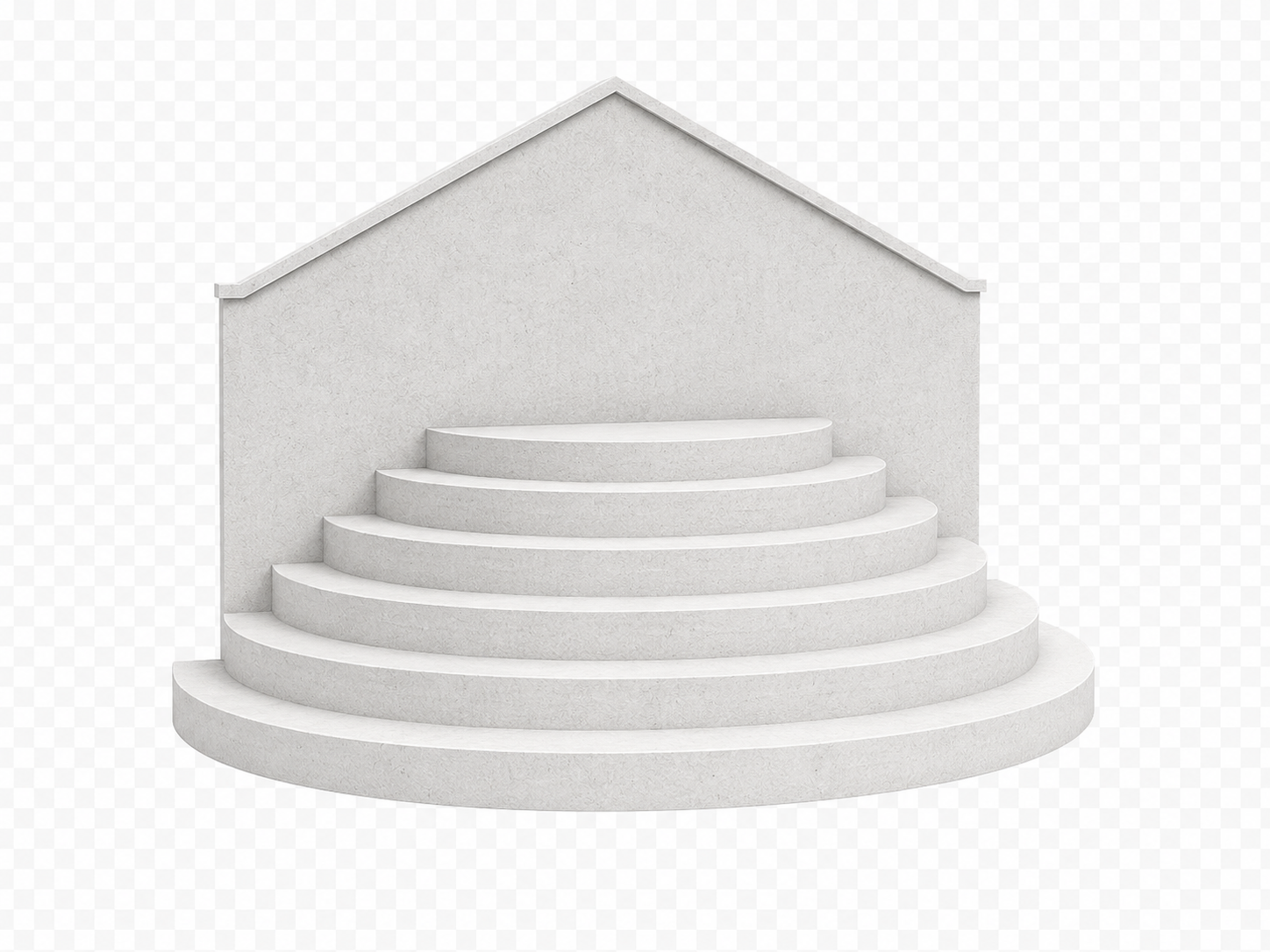
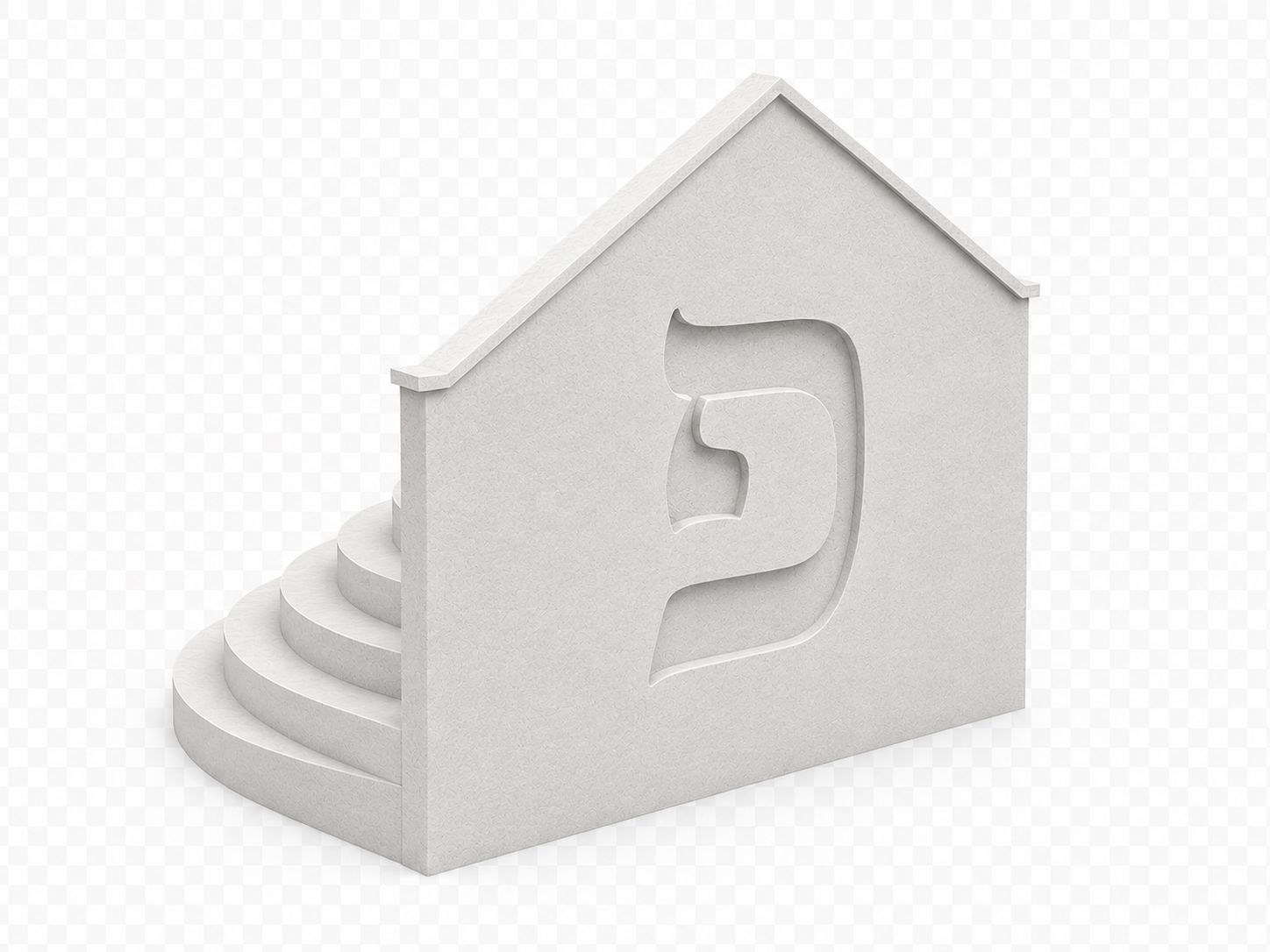
Visitors will want to sit. Others will come to look at the Upper Castle. The half-square stand will allow people to sit however they want and look wherever they want. But the stand itself will face Jerusalem. The four stands will be marked with the letters of the four levels of the PaRDes: פְּ רֶ דְּ ס.
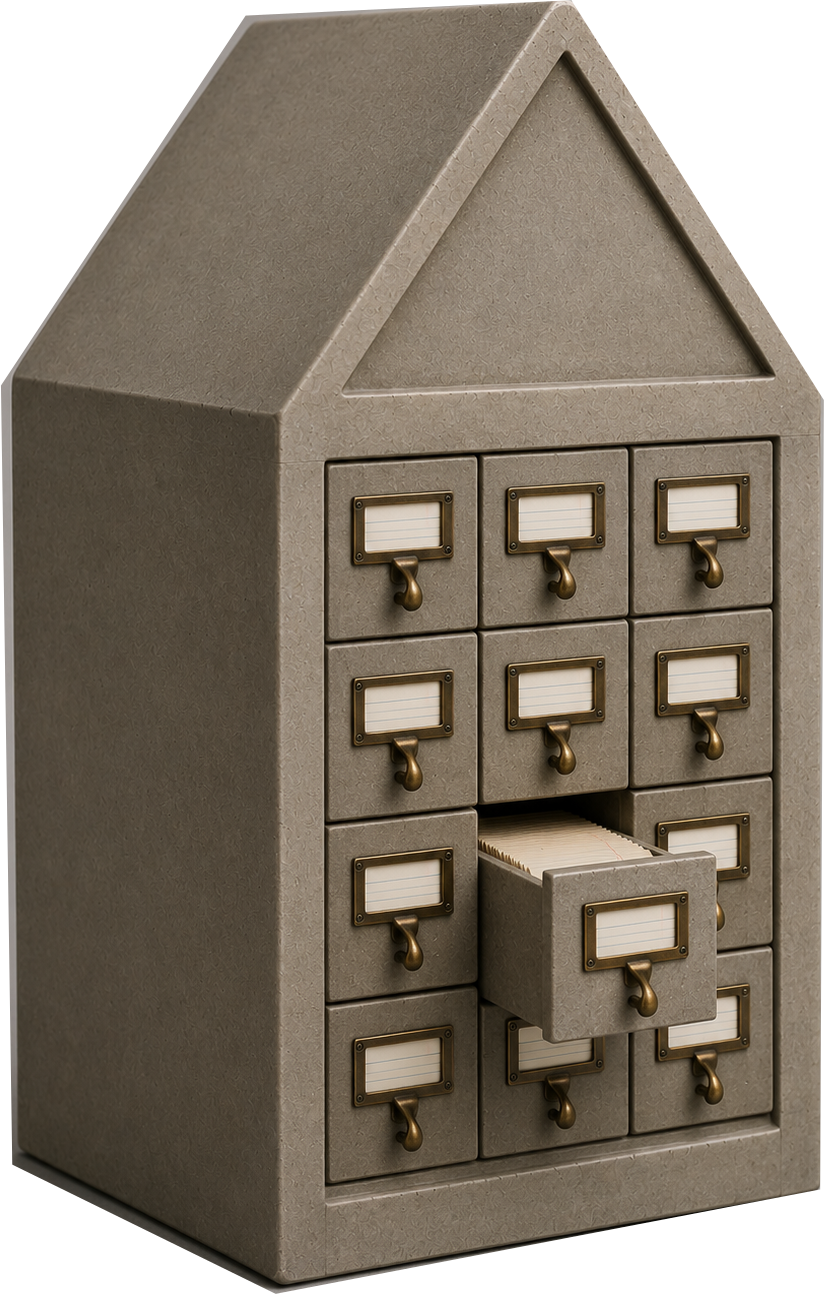
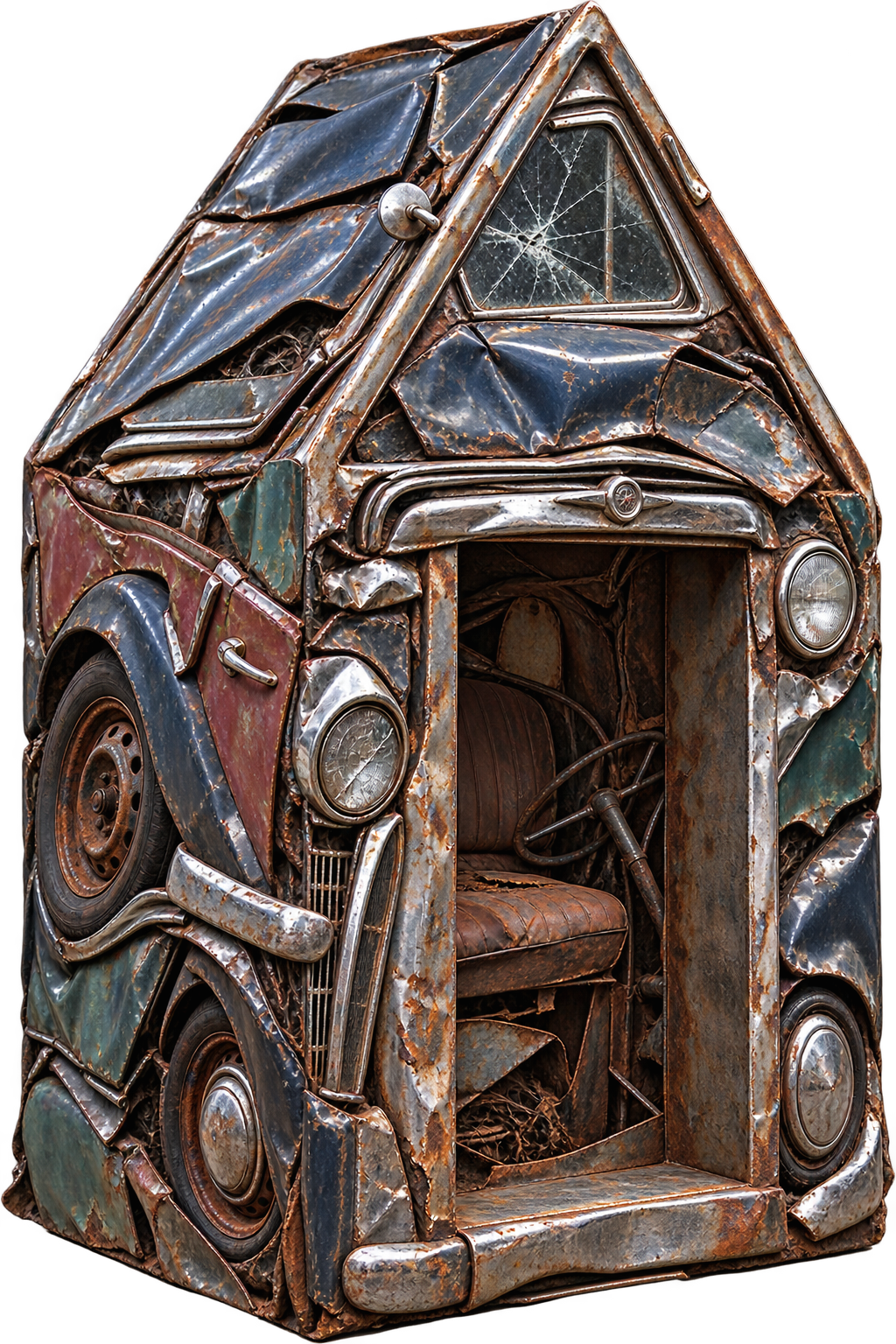
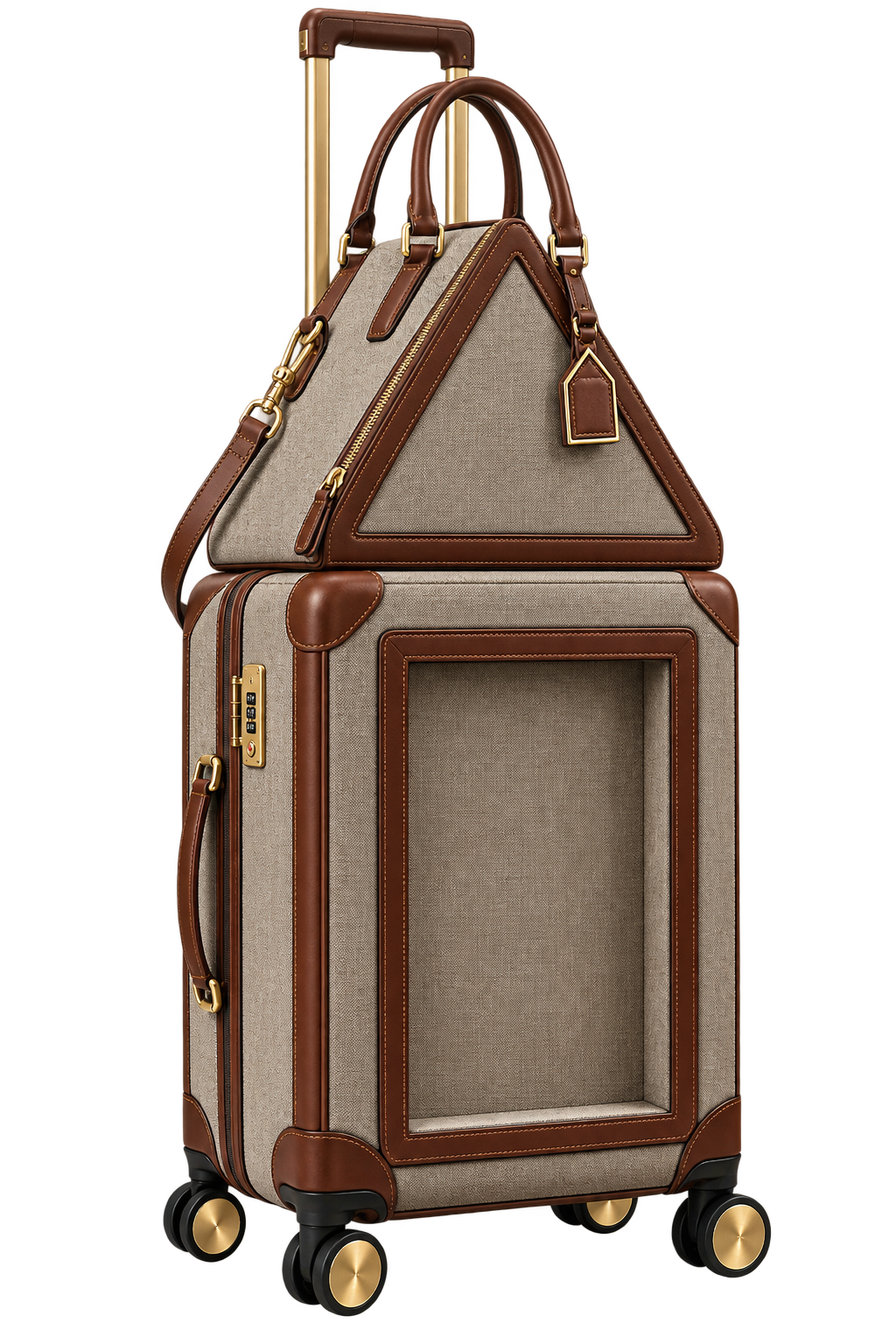
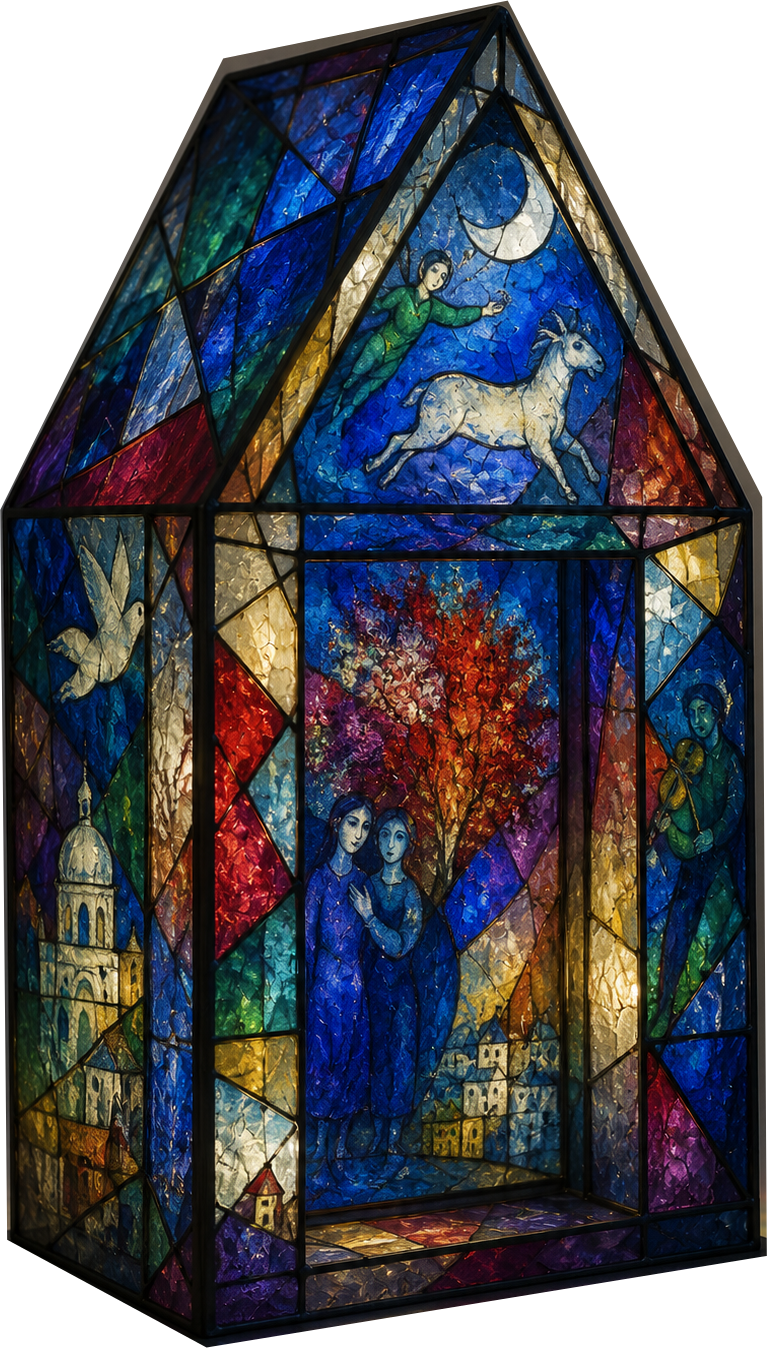
There will be space for modern sculptures at the edges of the foundations. They will somehow remind us of the shape of the ohela and develop its possibilities further. They will also be directed towards Jerusalem.

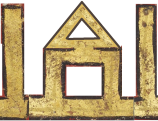
For the top of the wall, I created a pattern symbolizing the intertwined lifestyle of Lithuanians and Litvaks. At the same time, I propose a symbol for the Litvaks, similar to Gediminas' Castle, but with an ohel.

The wall near the Neris will present musicians of Litvak origin.
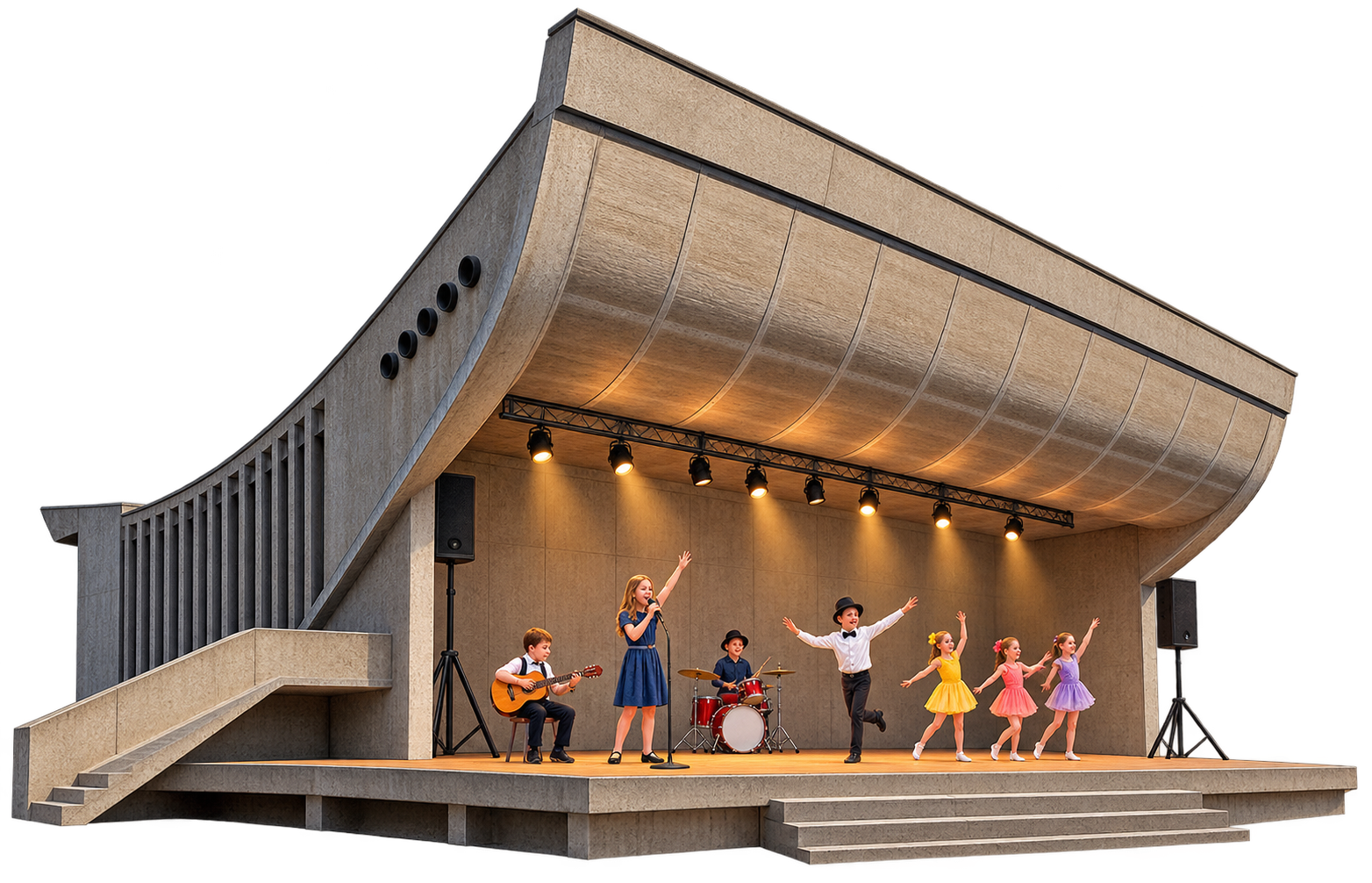
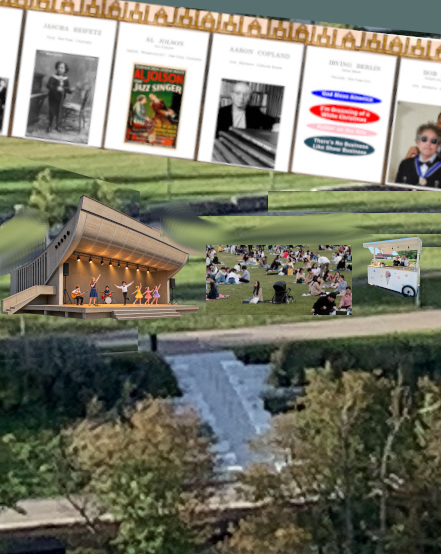
On the site between the Neris and the Necropolis wall, a reproduction of the Palace of Soviets will stand on a scale of 1:10, that is, 3 meters high, 7 meters wide, and 7 meters in diameter. The reproduction will serve as a stage. It will also have facilities for tourism services and a small exhibition about the history and significance of the Palace of Soviets. The reproduction will stand where Olimpiečių Street is now. The street will be closed because part of it crosses the Necropolis, and this area will be adapted for pedestrians and will be full of tourists.
Exhibition content: Plaques
I will display twelve plaques on the walls of the gallery presenting my view as an artist, historian, citizen and thinker that justice should be restored and a common heritage of Litvaks and Lithuanians should be created. Here are the topics of the plaques:
A) Introduction: Let us cherish spiritual wealth.
- 1) Poster: Necropolis of the Jerusalem of Lithuania
- 2) Exhibition presentation: Goals: 1) To restore the legal status of the cemetery. 2) To support a new discussion on its management. 3) To perceive this cemetery as a spiritual asset equal to the Gate of Dawn, the Hill of Crosses, the Nida Dunes, the Palace of the Kings. Means: To arouse the imagination through art that this cemetery can be a common heritage of Litvaks and Lithuanians. Exhibition sponsors.
B) Let's restore justice: Let's understand why it is inappropriate to place a Jewish memorial in a palace.
- 1) Let's respect the cemetery: The Jewish faith. There are thousands of remains. And even where there are none, cemeteries still remain, where any activity unrelated to them is inappropriate. Rabbinical court rulings.
- 2) Let's name the crimes: The Soviets appropriated and desecrated. Documents. The Genocide Center refuses to evaluate these Soviet crimes.
- 3) Let's curb Soviet thinking: The Soviet temple educated a Soviet person who thinks "All of Vilnius is built on cemeteries." Review how the Soviets despised Lithuanian cemeteries in various ways.
- 4) Let's curb those who are unkind to Jews: It is inappropriate to confuse the heritage of Jews and Bolsheviks. It is inappropriate to compare Jews and Bolsheviks. In 1941. statements against Jews by the representatives of our nation's will. Statements by those defending criminals. Rejection of cemetery defenders.
C) Let's create a common heritage: The artist's proposed solution.
- 1) Deeply: Create on the four levels (PaRDeS) on which the Gaon studied the scriptures. Emphasize the struggle of good and evil, darkness and light taking place in this place.
- 2) Responsibly: Understand the worldviews of the Litvaks and Lithuanians and responsibly intertwine them. Do not divide. New symbolism. Separate the area of the remains, foundations and wall.
- 3) Inspired: Understand the Litvak heritage as a connection with the Grand Duchy of Lithuania. Link it to the reconstruction of the upper castle. Decorate the wall. Develop the possibilities of the ohel form.
- 4) Straightforward: In the center of the foundations, restore the cemetery as it looked a hundred years ago. Compare the photos starting from the oldest surviving ohel.
D) Let's see God's participation: The history of cemetery protection.
- 1) In ancient times. An imagined past: the legend of Gediminas and the Jews. The Litvaks believed in the protection of the princes. The Tsar's fortress is being stormed. During the Polish era, the Litvaks defended the cemetery themselves.
- 2) In our time. Lithuania's flawed policy towards the Jews. Dovid Katz, Julius' poster, Let's respect the cemetery. We learned to listen to each other. The importance of the existing wall. An imagined future when we decide to abandon the Palace of Soviets. To put the building to sleep, to build a wall, to rebuild the castle. When leaving: Let there be light.
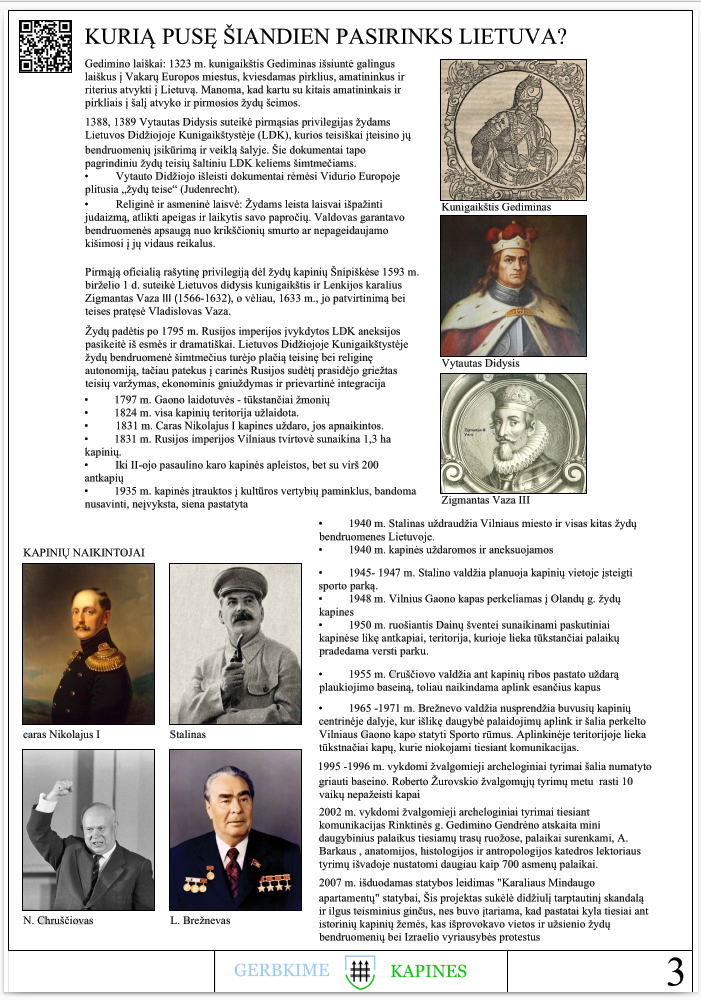
Artūras Imbrasas, a member of the "Let's Respect the Cemetery" Society, is finishing creating a mobile exhibition expressing the views of Vilnius' Jewish believers regarding the Vilnius Jewish Cemetery in Šnipiškės. I will rely on the knowledge and images he has collected.
Exhibition Guidelines: Prerequisites for a Common Heritage
I was born in California in 1964. In 1988, "Sąjūdis žinios" invited me to the Sąjūdis convention, which I described in the "Drauge" article "Sąjūdis and Unity". I noted how different forces contributed to the common cause.
But first, I will give an example so that it is clear what unity really is. Seven political prisoners have not yet returned to Lithuania. A hunger strike has been launched in Vilnius to demand the prisoners' freedom. The demands were to be raised at a rally on September 28, called by the Lithuanian Freedom League. Military units brutally dispersed the rally. However, the Lithuanian Reorganization Movement immediately blocked the league, and a commission was appointed to investigate the September 28 events. The commission decided that the units were illegally called out by the chairman of the Central Committee of the Communist Party of Lithuania, Songaila, and his deputy Mitkinas. Algirdas Brazauskas, a supporter of the movement, took advantage of the opportunity — he managed to remove his predecessors and become the new chairman.
So, one way or another, various forces contributed to the removal of Songaila and Mitkinas. Even if they did not agree, everyone desires Lithuanian independence, although they strive for it differently and even understand it in opposite ways. That is where unity lies — not that everyone did the same thing, but that they acted in harmony. Unity is respect for the activities and contributions of others. It is when, when a snake and a monkey, a wolf and a squirrel work together. Everyone was happy about the changes in the government. But still, a struggle took place at the congress: will the movement be actually independent from Brazauskas and the new ok. Lithuanian government.
2012 I heard from Litvak Grant Gochin that Lithuanians are lying about the crimes against humanity committed by their heroes Kazys Škirpa and Jonas Noreika. I extensively researched how in 1941 the representatives of the will of the Lithuanian people committed crimes against humanity in the name of Lithuania and for our alleged good. I learned from the most famous Litvak luminary, Dovid Katz, that believing Jews are concerned about the fate of the oldest Jewish cemetery in Vilnius. In 2020, I organized three letter-writing campaigns. 40 people wrote to the Seimas Budget Committee, then to the Speaker of the Seimas Viktorija Čmilytė-Neilsen, and finally to Prime Minister Ingrida Šimonytė, who quietly removed funding for the Sports Palace competition. In 2026, I organized a new letter-writing campaign, after which the Culture Committee postponed the consideration. I proposed organizing an exhibition in the Seimas to introduce the members of the Seimas to this cemetery. Emanuelis Zingeris agreed to curate it.
How can we foster the unity of Litvaks and Lithuanians with this cemetery? If 40% of Vilnius’s population were Jews, as in 1900, they would defend their own cemetery and manage it however they wanted. The Jews were murdered. Some Jews returned to Vilnius, some came from elsewhere. During the Sąjūdis, there were 9,000 of them, and now there are only 2,000. Many of them are elderly. Most of them do not dare to oppose the official Lithuanian Jewish community. Only a few believing Jews dare to oppose it, who for me are God’s chosen ones, the true seed of the Litvaks. In support of them, I am organizing this exhibition.
The most important thing is to listen to the believing Jews of Vilnius: Rūta Bloštein, Arkadij Kurliandčik, Artūras Imbrasas. They are organizing a mobile exhibition to present facts about the cemetery so that its legal status can be restored. And as a Lithuanian, I offer Lithuanians a solution on how we Lithuanians could cherish the common heritage of Litvaks and Lithuanians.
I suggest that we Lithuanians understand that we are the majority, and the Jews are the minority. The majority has its rights and responsibilities, just like the minority. Our nation-state needs a social diaspora and vibrant minorities. We must take care of our unity, how to include everyone in a benevolent way and meaningfully intertwine them.
I suggest that we understand that this cemetery is our heritage from the times of the Grand Duchy of Lithuania. We Lithuanians are the majority, the inviters, the protectors, and our Jews are the minority, the invited, the protected, from ancient times. The Jews have been attached to the Grand Duchy of Lithuania, they have been attached to interwar Lithuania. They remember their homeland, Lithuania, their shtetls (hometowns), as the dearest, most beautiful country of all. Our Litvak Jews are considered by Jews to be the coolest Jews. Their qualities - enlightenment, intelligence, scholarship, earthiness, simplicity, restraint, vitality, perseverance - are probably qualities adopted from us Lithuanians. They respect us as enlightened and simple people. Their love for Lithuania stems from the tolerance of our ancestors, from the Lithuanian statute, from our Lithuanian civilization, which they preserved. Through them, we can become aware of our civilization and at least somewhat regain it, as our common heritage.
I suggest we remember that this cemetery was under the jurisdiction of the castle. The Upper Castle is clearly visible from it. The Jews were concerned not to have land that could be taken away, but rather to be under its protection. They believed that Lithuania would protect them forever. Let us be blessed by their faith. I suggest that we rebuild the Upper Castle and the cemetery under its protection together, so that both the castle and the cemetery look as they should. Let us understand that this will last for decades, as with the Palace of the Kings, but in return we will have symbols of our statehood, and we will restore the friendship of Lithuanians and Litvaks, which the whole world will rejoice in. This is our common future.
I suggest that the cemetery be given an honorable name: the Necropolis of the Jerusalem of Lithuania. It is of international significance, and the name "Šnipiškės" is of local significance, completely dishonorable. In ancient times, it was not called that. It was simply the Vilnius Jewish Cemetery. Unfortunately, the names "Vilnius Jews...", "Vilnius Poles...", "Vilnius Russians..." disturb the Lithuanian subconscious, because they remind us of the times when our Vilnius was only 2%, such as in 1900. We feel that a part of Vilnius is being torn apart, that Vilnius is being encroached upon. Therefore, it would be better to call them not the Vilnius Jewish Cemetery, but the Lithuanian Jerusalem Cemetery. And here Lithuania does not mean present-day Lithuania, but the Grand Duchy of Lithuania, which the wise rabbis of Vilnius made famous.
Jews are not lords! There are many Litvaks in the diaspora who care about these cemeteries, who are hurt by their contempt. But they cannot boss us around. They can, however, move us to listen to our dear local Vilnius Jewish believers and to the rabbis serving specifically in Lithuania, especially Rabbi Sholom-Ber Krinsky. After listening, we Lithuanians can figure out for ourselves how to manage these cemeteries so that they are our common heritage, both Litvaks and Lithuanians. It will not be otherwise, because the Litvaks are too weak to take care of them themselves.
I suggest looking at the Necropolis in an enlightened, ordinary, Lithuanian way.
- Let us realize that there are still thousands of remains all around the foundations of the Palace of Soviets. Let us be sensitive, let us respect the Jewish faith, let us understand that they view cemeteries in their own way. According to the Jewish faith, the remains should not be moved. The rabbis would still want to rebuild tombstones over them for this reason and would find justifications for it. But from a Lithuanian perspective, this becomes too inconsistent and frivolous, it hurts the mind and heart. The simplest thing is to prevent people from walking there unnecessarily, for example, by covering it with a durable cloth. In my model, I represent this area as an awning.
- Let us understand that the foundations of the Soviet Palace are part of the cemetery, but there are hardly any remains under them. Instead, on these foundations one can open up possibilities for the imagination, what could only be appropriate in a cemetery. I propose to restore tombstones based on Klausner's book and old photographs here. I propose to understand and emphasize the terrible Soviet crime as a battlefield between evil and good, which we will immortalize here. I propose to build the restored mausoleum of the Vilnius Gaon in the center of this field, like the axis of the universe, and around it the nearby ohel, as much as possible. Orthodox Jewish pilgrims would feel what it meant to stand among the ohel. However, I would like everyone to understand that these are only symbols of truth, and truth has more levels. I propose to supplement the traditional ohel with a ring of large colored ohel. Each colored ohel would show photographs from the Litvak cities, towns, and yeshivas who lived in that direction. This would encourage us to realize that we are standing in the hearth of the Litvak land. I propose to further develop the form of the ohel and the issues of life and death with contemporary sculptures that would stand at the edge of the foundations and help us realize that this Necropolis does not represent only a certain sect of Orthodox Jews, but rather all Jews, foreigners, minorities, intellectuals and all of humanity. I propose to build four hemispherical stands at the edge of the foundations, where visitors could sit and look at the Upper Castle, Jerusalem and in all directions.
- Let us realize that the pitiful Soviet Palace will no longer annoy us as soon as we mark the boundary of the cemetery with a high wall 5 or 6 meters high. And such a kilometer-long wall becomes an opportunity to artistically depict the entire culture of the Litvak land. In my exhibition, I do this in the simplest way: I depict about a hundred distinguished Litvaks. As a Lithuanian, I am always amazed at how they make Lithuania famous, diversify and enrich it. The wall itself can be one of the most visited places in Vilnius.
The cemetery gates used to stand on the northwestern side. They can be restored, but they will not be used because we will cover the remains with a cloth. Now we will need a new gate on the eastern side. I call them the Gate of Twilight as related but opposite to the Gate of Dawn. The Gate of Twilight invites us to be willing to step into this terrible battlefield of evil and good with all the powers of our ancestors. Therefore, we, the Lithuanian guardians, decorate these gates and the entire outer wall as we need, so that we realize that this is the heritage of our Jews, our Litvaks, and also our Lithuanian heritage.
With this attitude, over the next few decades we will accumulate spiritual capital, enjoy the Upper Castle and the Necropolis of the Jerusalem of Lithuania. This will unite Lithuanians and Litvaks, teach us to make new friends, encourage Litvaks to recover, and inspire our friends around the world in these turbulent times. By our example, we will educate Russia and other countries about what it means to uphold a nation-state, to exercise the rights and responsibilities of the majority, to protect minorities, and to enjoy life together with them.
I believe that this exhibition will inspire all of us to take care of these cemeteries even better, more intelligently, more understandingly, more artistically, more justly. Let us think about the possibilities and implement them!
Exhibition works: I invite you to help!
I am eagerly looking for collaborators! I invite you to help:
- Select and depict 100 of the most famous Litvaks.
- Cut, carve, paint the tombstones and other details of the model.
- Organize workshops in various facilities, invite Litvaks and Lithuanians.
- Organize discussions in the Seimas during the exhibition on various issues: the attitude of Lithuanian and diaspora Jews to cemeteries, Lithuanian policy towards the Jewish national minority, the future of the Lithuanian nation, the mobilization of the Litvak community, the significance of the Palace of Soviets, the memory of the Sąjūdis, the aspirations of entrepreneurs, tourism opportunities, the reconstruction of the Upper Castle, the improvement of the area, other issues suggested by you.
I invite artists and activists to share their ideas, how would you like to join!
Andrius Kulikauskas, ms@ms.lt, +370 607 27 665
More about the exhibition: https://www.kapines.com/gerbkime/Talka/Paroda
Latest version of the exhibition concept: https://www.kapines.com/gerbkime/Talka/ParodosSumanymas